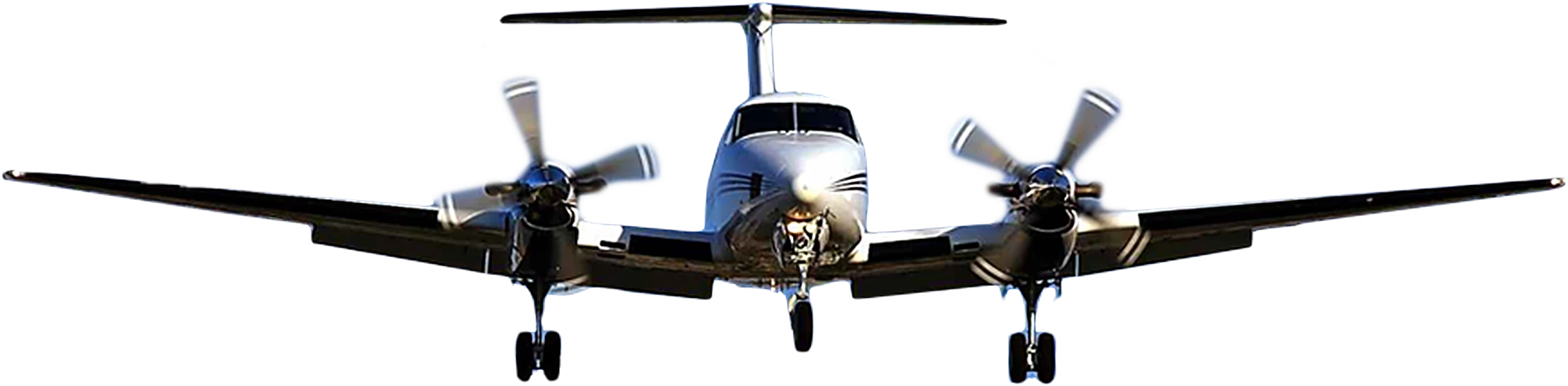

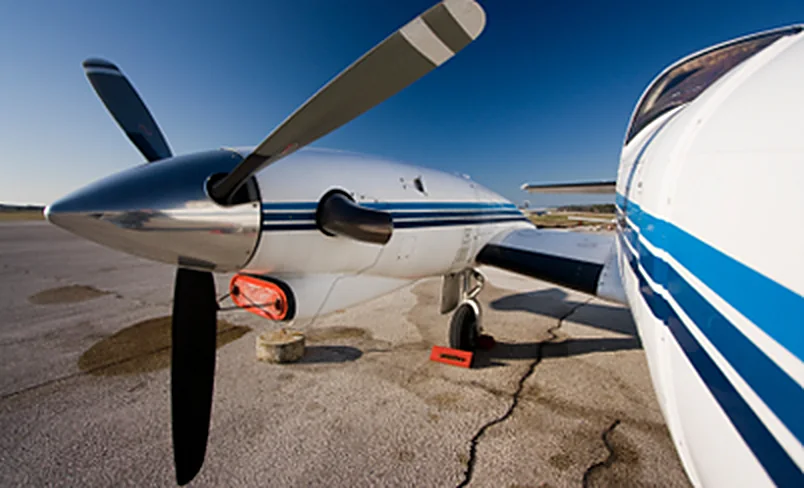
"Low-altitude engine failure is never worth the risks involved."
That sentence comes from the FAA pamphlet Flying Light Twins Safely (P-8740-66, 2008), page 10, since pulled from the FAASTeam website. The next sentence gives numbers: multiengine instructors "should approach simulated engine failures below 400 feet AGL with extreme caution, and failures below 200 feet AGL should be reserved for simulators and training devices."
Access Flight Training Services trains in the customer's airplane at the customer's airport, and we have no simulator to sell. Read this knowing who wrote it: a provider explaining where the airplane stops being the right place.
How low should a simulated engine failure go?
The FAA's current reference is the Airplane Flying Handbook, FAA-H-8083-3C, chapter 13:
- A simulated failure at low altitude "normally occurs at a minimum of 400 feet AGL," after the learner has mastered the procedures higher up. Starting one "at extremely low altitude, immediately after liftoff, or below VSSE creates a situation where there are non-existent safety margins." (p.13-36)
- "No engine failure should ever be introduced below safe, intentional one-engine inoperative speed (VSSE)." (p.13-18)
- Below 3,000 feet AGL, an in-flight failure should be a smooth throttle reduction, so "the engine is kept running." (p.13-35)
- Simulated failures "should not be conducted during slow flight" (p.13-18) and "should not be performed during stall entry and recovery." (p.13-19)
Every FAA figure here points the same way: the closer a failure gets to the ground, the stronger the case for a simulator.
The pamphlet needs a caution. The FAA's December 2025 Airman Testing Community Advisory says the agency removed the 2008 edition from the FAASTeam website and plans to drop it from ACS references, because its information on factors affecting VMC may not be consistent with the handbook. The advisory does not mention the low-altitude sentence, and its June 2025 edition sends airmen to the handbook for multiengine operations.
Chapter 13 assumes reciprocating engines unless it says otherwise, so turboprop twin owners should also read how feathering differs between PT6A and TPE331 engines. If you fly a single such as a PC-12, TBM or Meridian, the SOP below still applies and the rest comes from your AFM or POH.
What is the Access SOP for simulated engine failures?
Two lines:
- No engine is shut down during training.
- No engine failure is simulated between rotation speed and 500 feet AGL.
These are company rules, not FAA numbers. The 500 feet sits above the pamphlet's 200 and the handbook's 400.
The no-shutdown rule goes further than the FAA's text. The handbook describes actual feathering for training at altitudes and positions where a safe landing is readily available if the propeller will not unfeather, with restart planned no lower than 3,000 feet AGL, while noting that repeated feathering and unfeathering "is hard on the engine and airframe." (p.13-36) A pilot who wants to see a propeller actually feathered in flight needs a different provider, and should ask before booking.
Practices differ between providers. A King Air Magazine article of November 26, 2025, by an instructor at a school that sells both formats, describes an in-flight engine shutdown with a 5,000-foot AGL minimum. A PC-12 provider's FAQ says it never shuts the engine down in flight and simulates the failure with a power setting.
Published tuition. Travel expenses added if we come to you. Tuition shown takes effect January 1, 2027. Courses before then are at the current rate, so ask us.
What does the handbook say about the VMC demonstration?
If your syllabus includes one, these are the handbook's general parameters for a twin with non-counter-rotating engines, not a procedure for your airplane. Your AFM or POH governs.
| Item | Handbook, pp.13-26 and 13-27 |
|---|---|
| Altitude | Allows the maneuver at least 3,000 feet AGL |
| Configuration | Gear up, flaps in the takeoff position, trimmed for takeoff and left there |
| Entry speed | About 10 knots above VSSE or VYSE, whichever is higher |
| Power | High rpm on both propeller controls, critical engine to idle, the other to takeoff power |
| Bank | Up to 5 degrees, as appropriate for the make and model |
| Deceleration | 1 knot per second, no faster |
| Recovery | At the first uncontrollable yaw or any stall symptom, retard the operating engine's throttle and lower the pitch, then recover at VSSE or VYSE |
| Holding altitude | Not a criterion: "This is a demonstration of controllability, not performance." |
| VMC at or below stall speed | Artificially limit rudder travel, at about 20 knots above VS |
With normally aspirated engines, VMC falls with altitude while stall speed stays the same, so the margin shrinks. The handbook warns that a demonstration "allowed to degrade into a single-engine stall with high asymmetrical thrust may result in an unrecoverable loss of control and a fatal accident." (p.13-26) It also rules out an engine cut from high power (p.13-25) and an entry from a high pitch attitude with both engines operating (p.13-27).
What engine out training in the airplane should include
An IPC in a twin under 14 CFR 61.57(d) must include Area of Operation VII, Tasks B and C, of FAA-S-ACS-8C: one engine inoperative during straight-and-level flight and turns, and an instrument approach and landing with an inoperative engine (simulated). Both must be done in an aircraft or a Level B, C or D full flight simulator. (p.29)
The handbook adds two that suit the airplane: "ample time" showing the performance difference between zero thrust and a windmilling propeller (p.13-36), and procedures practiced "in the airplane as it sits on the ground without the engines running," whose value it says "may be substantial." (p.13-35)
Practice in the airplane holds up when the failure is briefed, flown at altitude and introduced with the engine still available.
The handbook also names things to leave out: single-engine stalls, pulled circuit breakers, and passengers loaded aboard to practice emergencies at maximum takeoff weight (pp.13-19, 13-35, 13-36).
Why failures at rotation belong in a simulator
The handbook says so: "Emergency procedures that would be either dangerous or impossible to accomplish in an airplane can be done safely and effectively in a flight training device or simulator." (p.13-36)
Our list, which is our judgment and not FAA wording, is failures at rotation, fires and multiple failures. Our SOP rules out a failure at rotation in the airplane, you cannot produce a fire in it, and you should not stack failures in it. Anyone who wants to rehearse a failure at rotation needs a simulator, and that includes pilots who train with us.
Ben Berman put the trade-off this way in AOPA Pilot on May 12, 2026: the risk of an accident or incident during in-aircraft recurrent is "hard to quantify, but it's greater than when using a simulator," while the airplane gives you your own flight deck display, GPS and automation, which he calls rare in a simulator. We found no controlled study comparing outcomes for owner-flown turboprop pilots, so we offer no number. Our comparison of simulator and in-aircraft training covers the rest.
Does engine-out training shock cool a piston engine?
Lycoming publishes a 50 F per minute guideline. Others argue real-world evidence of damage is thin. Neither side of the shock cooling argument has a controlled fleet study that we could find.
Lycoming's article cites Service Instruction 1094D and lists cracked cylinder heads and warped exhaust valves among possible results of fast, low-power letdowns. Rick Durden, in AVweb on January 4, 2018, argues there is no hard evidence that power reductions crack cylinders and says CHT falls more than 100 F per minute at shutdown. Neither is about engine-out practice specifically. We found no published cooling-rate limit on Continental's site and did not check its operator manuals, so check yours.
The handbook stays practical: a smooth throttle reduction "avoids abusing the engine" (p.13-35), and after a prolonged zero-thrust cool-down, avoid an immediate high power application if possible (p.13-36). On piston aircraft, our single-engine training rules have us watching engine temperatures, which costs nothing whichever side is right. Turboprop owners can skip this: chapter 15 says a turboprop's throttles can be closed at any time without concern for cooling the engine too rapidly (p.15-13).
What to settle with your instructor before the flight
The handbook calls surprising a learner with an emergency, without a thorough briefing beforehand, a hazardous condition (p.13-35). Whoever you train with, settle these first:
- How each failure will be introduced and what you are expected to do.
- Who is operating which control.
- The altitude floor and minimum speed for each maneuver, from your AFM or POH.
- Whether any engine will be shut down, and if so where.
- Whether your policy says anything about engine-out practice. Ask your broker.
Bring the AFM or POH to that briefing. The handbook's rule for a discrepancy between a checklist and the manual is one line: "the AFM/POH always takes precedence." (p.13-35)
Frequently asked questions
What can we not safely do in the airplane? Engine-out at rotation, V1 cuts?
In engine out training in the airplane with Access, no failure is simulated between rotation speed and 500 feet AGL, and no engine is shut down. FAA-H-8083-3C says a simulated failure immediately after liftoff or below VSSE creates non-existent safety margins. A failure at rotation belongs in a simulator, along with fires and multiple failures, which is our judgment and not FAA wording.
Will you shut down an engine on my airplane during training?
No. The Access SOP says no engine is shut down during training. The FAA's Airplane Flying Handbook does describe actual feathering for training at altitude, with restart planned no lower than 3,000 feet AGL, and practices differ between providers, so ask any provider before you book.
Do I still have to fly single-engine maneuvers for an IPC in my twin?
Yes. FAA-S-ACS-8C lists Area of Operation VII, Tasks B and C, for an IPC in a multiengine airplane: one engine inoperative during straight-and-level flight and turns, and an instrument approach and landing with an inoperative engine (simulated). Both must be done in an aircraft or a Level B, C or D full flight simulator. Your AFM or POH sets the procedures.
Will engine-out practice shock cool my piston engines?
Lycoming publishes a 50 F per minute guideline. Others argue real-world evidence of damage is thin. Neither side has a controlled fleet study that we could find, so ask how your instructor manages power and temperatures. The FAA's handbook asks for smooth throttle reductions and, if possible, no high power right after a prolonged zero-thrust cool-down.
Is a simulator safer for practicing engine failures?
For failures near the ground, the FAA text points that way: FAA-H-8083-3C says emergency procedures too dangerous for an airplane can be done safely in a device or simulator. We found no controlled study comparing outcomes for owner-flown turboprop pilots, and we publish no percentage. The airplane gives you your own panel at your own airport. The simulator gives you the failures the airplane cannot.
Sources
- Flying Light Twins Safely, P-8740-66, FAA, 2008. Removed from the FAASTeam website per the advisory below; still served at this address on November 2, 2026.
- Airman Testing Community Advisory, December 2025 Edition, FAA, 2025.
- Airman Testing Community Advisory, June 2025 Edition, FAA, 2025.
- Airplane Flying Handbook, FAA-H-8083-3C, Chapter 13: Transition to Multiengine Airplanes, FAA, 2021.
- Airplane Flying Handbook, FAA-H-8083-3C, Chapter 15: Transition to Turbopropeller-Powered Airplanes, FAA, 2021.
- Instrument Rating, Airplane ACS, FAA-S-ACS-8C, FAA, dated November 2023, effective May 31, 2024.
- 14 CFR 61.57, eCFR, FAA, 2026.
- Recurrent headache relief, Ben Berman, AOPA Pilot, May 12, 2026.
- Engine Failure: Build Confidence in Handling Worst-Case Scenarios by Training in Your Aircraft, Zach Cleaver, King Air Magazine, November 26, 2025.
- FAQs, 3-Green Aviation, undated, read November 2, 2026.
- How to Avoid Sudden Cooling of Your Engine, Lycoming, undated, read November 2, 2026.
- Shock Cooling: Time To Kill the Myth, Rick Durden, AVweb, January 4, 2018.
- Continental Aerospace Technologies, company site, no cooling-rate limit found as of November 2, 2026.
Access Flight Training ServicesRevised 2026-11-03