

The future of flight training
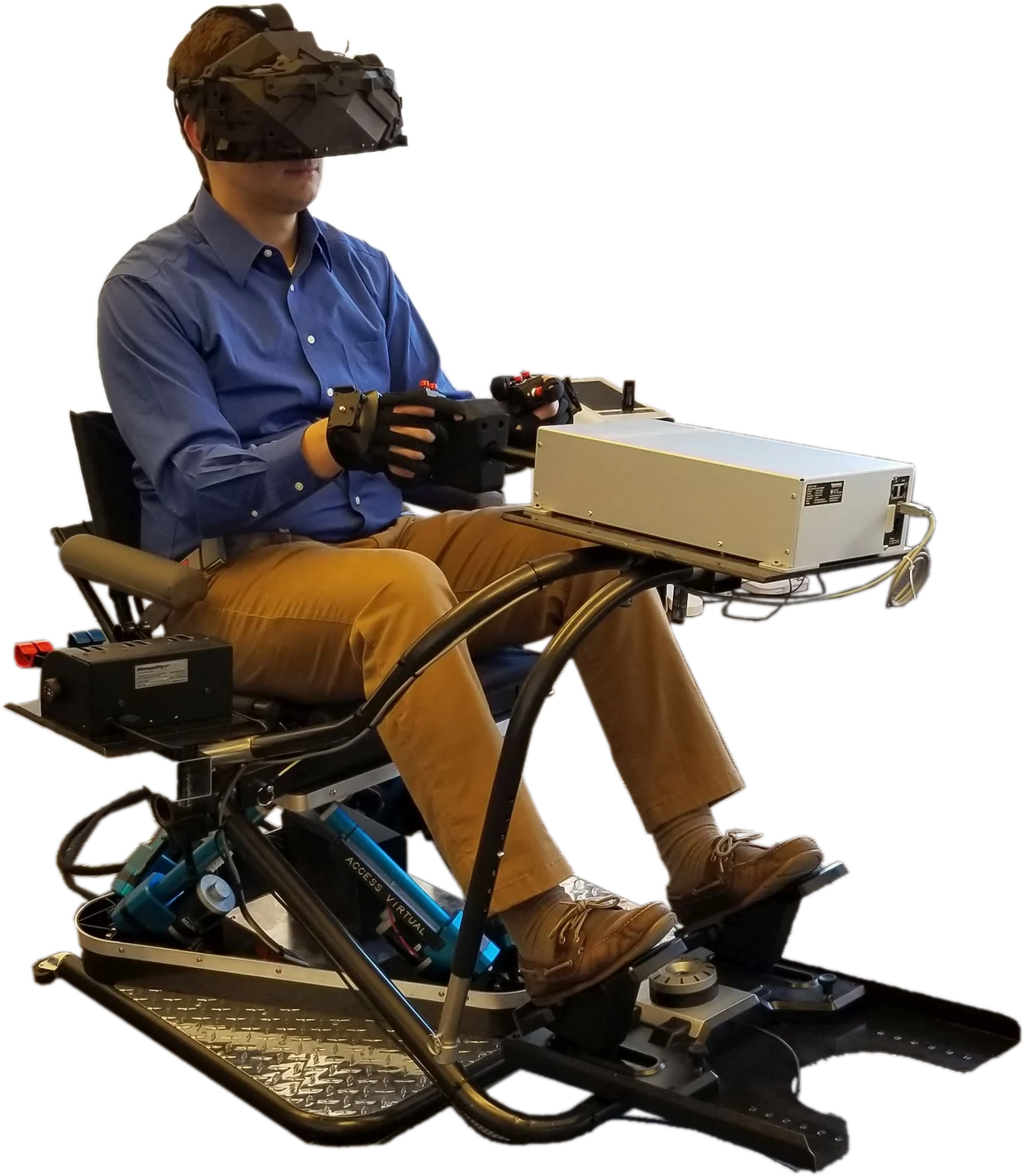
A full-motion virtual reality flight simulator, built to travel in three cases.
- Developer
- Access Virtual LLCLed by Paul Liberatore
- Status
- In developmentNot for sale today
- US patent
- 10,878,714Granted in 2020
A simulator that travels to the pilot
Access Flight Training Services brings the instructor to the pilot's own airplane. Access Virtual, a separate company led by the same founder, is building a portable full-motion VR flight simulator that travels the same way.
A full flight simulator lives in a building. It needs its own power and cooling, it is built around one aircraft type, and pilots travel to it. Access Virtual puts full motion, a cockpit-wide view and the pilot's own hands on one seat that packs into three weather-proof cases and runs from a standard wall outlet. It can go where pilots already are: a squadron, a classroom, a hangar or a ship.
- Cases
- 3Weather-proof, whole system
- Weight
- About 150 lbWith the cases
- Footprint
- 5 × 4 × 3 ft
- Power
- 110 VStandard wall outlet
- HVAC
- No special requirements
Design figures from Access Virtual, September 2026, for the development prototype. They can change as the demonstration units are built.
Access Flight Training ServicesRevised 2026-11-06
What the pilot sees, touches and feels
Four systems make one cockpit. The pilot holds no controllers: they see their own hands, reach for a switch and feel it.
Vision: a view as wide as a canopy
A mixed reality headset fills the view out to the edges, where a pilot picks up the runway, the horizon and other aircraft. Cameras and a hand-tracking sensor in the headset place the pilot's own hands in the virtual cockpit.
- Headset
- VRgineers XTAL 3 NEO
- Displays
- Two 4K, 3840 × 2160 per eye
- Field of view
- Up to 180° horizontal, 120° vertical
- Hands
- Tracked and seen in the cockpit
Headset figures: the manufacturer's published specification. The field of view is the widest setting.
Touch: the switch answers the finger
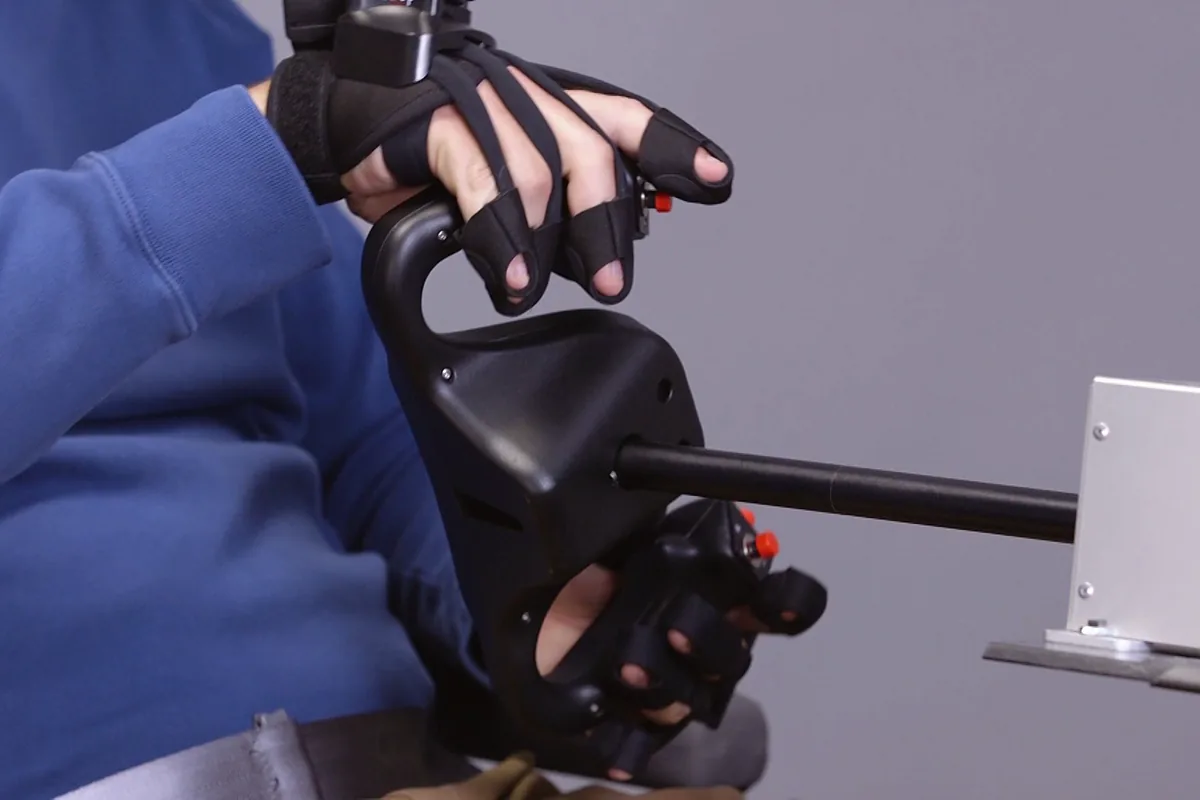
Haptic gloves vibrate at the fingertips when a finger presses a switch. The pilot sees the switch, presses it and feels it, and the switch does what it does in the aircraft.
- Gloves
- bHaptics TactGlove DK3
- Feedback
- Vibration at the fingertips
Flight controls: matched to the aircraft
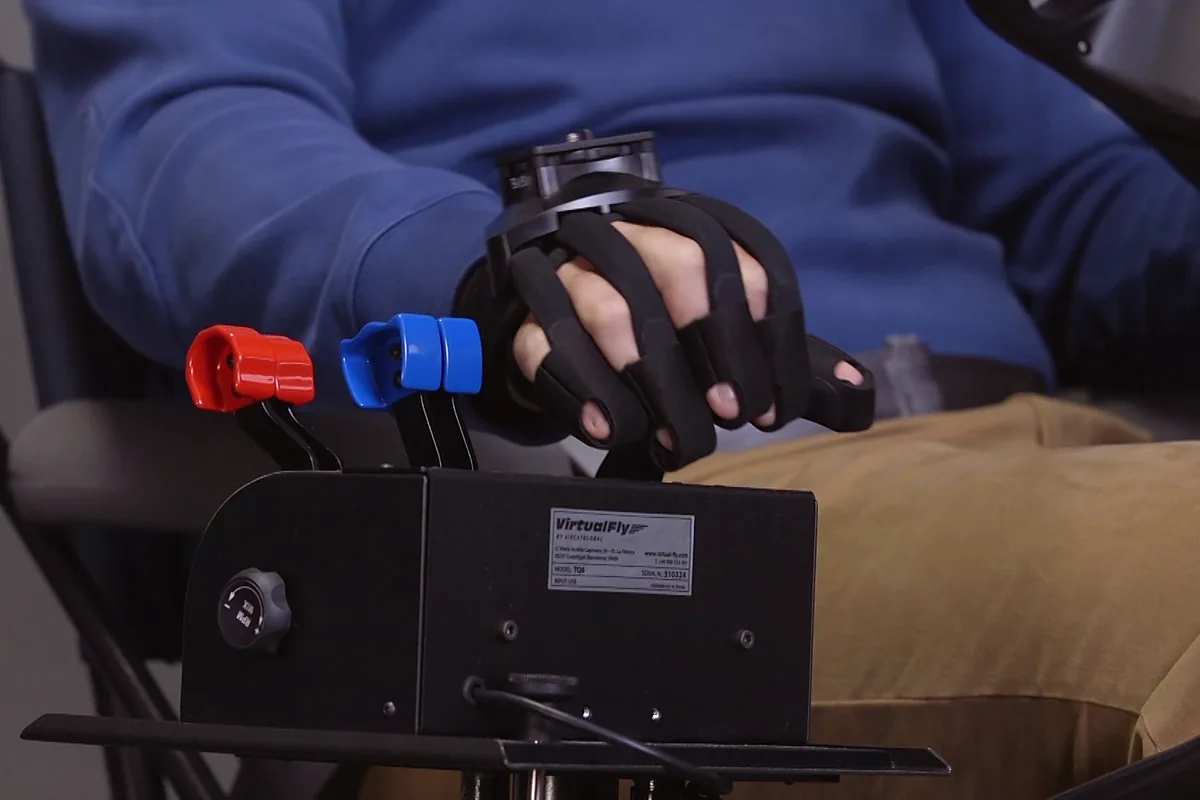
Stick or yoke, throttles and rudder pedals match the aircraft being trained, so hands and feet practice the motions they will use in flight. They connect by USB and change with the aircraft, on the same seat.
Motion: six degrees of freedom
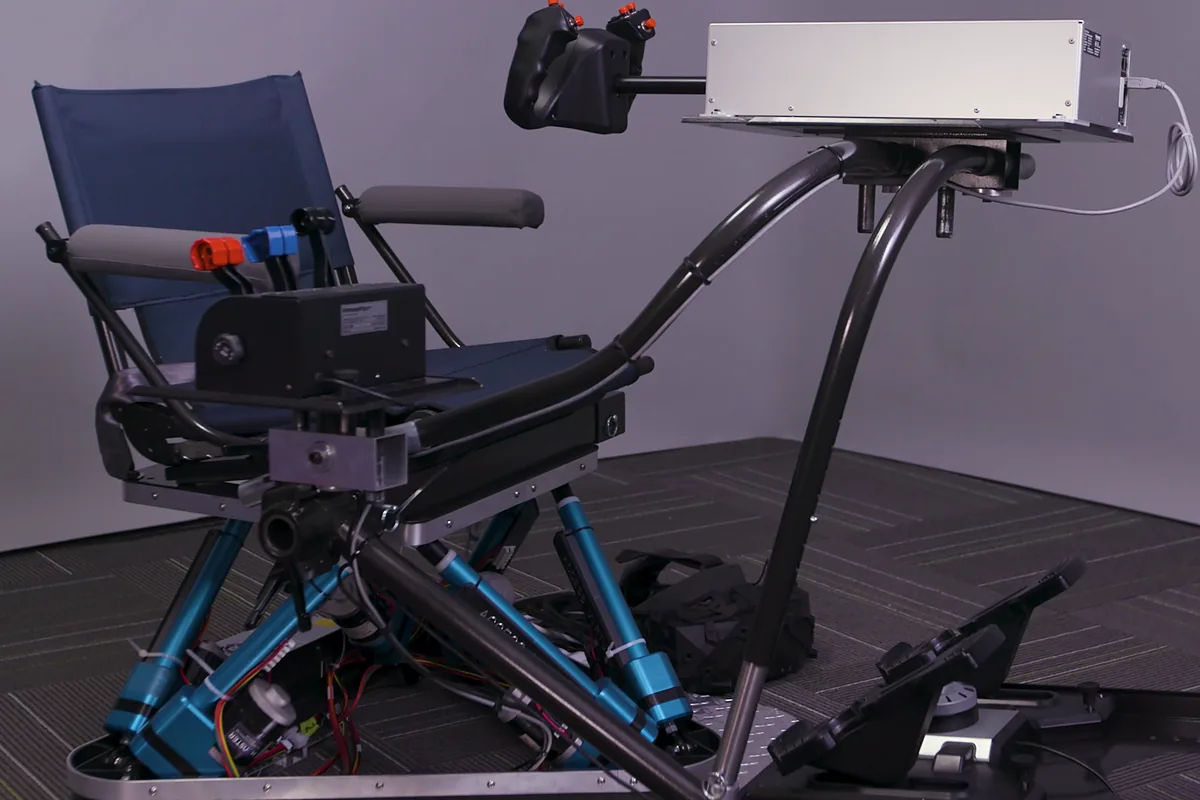
Six actuators under the seat move the pilot in pitch, roll and yaw, and up and down, side to side and fore and aft, following the flight model. The platform, seat, actuators and motors are a proprietary design, made in Blairsville, Pennsylvania.
- Flight model
- X-Plane 12, commercial license
- Motion software
- SimTools
Access Flight Training ServicesRevised 2026-11-06
Where the program stands
Paul Liberatore started the program in 2017. The patent was granted in 2020, and by 2025 the pilot's own hands worked inside the cockpit. The next step is a pair of demonstration units.
- 2017Program startsFirst system built
- 2018Patent filedPriority date February 2, 2018
- 2020Patent grantedUS 10,878,714, to Access Virtual LLC
- 2025Hands in the cockpitHand tracking and haptic gloves working in the simulator
- NowDemonstration unitsRebuilding with new motion components
- NextTwo units, linkedFormation training between two seats
- ThenTraining customersFirst evaluations with a training customer
Access Flight Training ServicesRevised 2026-11-06
Who is building it

Paul A. Liberatore
Founder of Access Virtual, and CEO & Owner of Access Flight Training Services
Paul started Access Virtual and is an inventor on its patent. He retired as a Commander (O-5) from the Naval Reserve and USMC after a 20-year career in aviation operations and safety, flying mainly the RF-4B and A-6E, with about 200 day and night carrier landings. He also led large technology development and support organizations at a Fortune 500 company, and has trained pilots in their own aircraft through Access Flight Training Services since 2011.
- US patent 10,878,714
- Inventor
- Carrier landings
- About 200, day and night
- Training pilots
- Since 2011

Access Virtual LLC is a veteran-owned company. Fyware, the extended reality team that integrated the headset, the hand tracking and the haptic gloves, works as part of its development team.
Access Flight Training ServicesRevised 2026-11-06
Frequently asked questions
Is the Access Virtual simulator for sale?
Not yet. It is in development, and it is not sold or leased today. The next step is a pair of demonstration units, then evaluations with training customers. To take part in that step, ask Paul Liberatore for a private briefing.
Has the FAA or the military evaluated it?
No. It has not been evaluated or qualified by the FAA or by any military service. That work depends on the device and on the training it is used for, and it comes after the demonstration units.
Which aircraft can it simulate?
The aircraft is a configuration: the flight model in the software and the physical controls change, and the seat stays the same. The prototype has been demonstrated with a King Air C90 cockpit, and the video on this page shows a military trainer cockpit.
Can several simulators fly together?
That is part of the design, for formation training. Several seats on one local network have been tested as a concept. Linking seats at separate sites has not been tested yet.
Does Access Flight Training Services use this simulator in its courses?
No. Access courses are flown in the customer's own aircraft, at the customer's airport. Access Virtual LLC is a separate company, also led by Paul Liberatore. See what an Access course delivers.
Access Flight Training ServicesRevised 2026-11-06