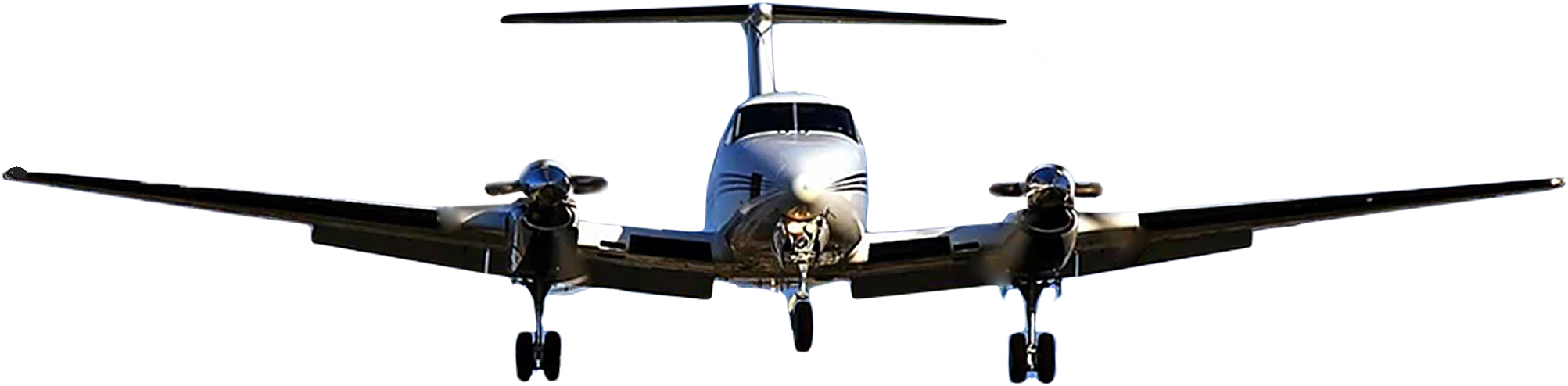


Seventy-five, then 78, then 80. Sunset Aviation Insurance, a broker, gave those in its November 2024 market outlook as the maximum age for single-pilot turbine-powered aircraft: 75 from 2020 to 2022, a trend up to 78 in 2023, and 80 in 2024.
None of the three is in the Code of Federal Regulations. A turboprop insurance age limit is a term set by underwriters, and brokers have reported it moving from one year's market to the next.
Is there an FAA age limit for flying a turboprop?
Not for an owner flying under Part 91, as we read the rules. The age rule most pilots know reads:
"No pilot may serve as a pilot in operations under this part if that person has reached his or her 65th birthday."
That is 14 CFR 121.383(e), and "this part" is Part 121, the air carrier rules. We searched the eCFR text of Parts 61 and 91, as of November 1, 2026, for every age and every birthday. Part 91's ages concern occupants and their restraints. Part 61 sets minimum ages for certificates, and its maximum ages are in 61.3(j), with a matching paragraph in 61.77: the 60th birthday, or the 65th with more than one pilot, for the international operations those paragraphs list.
| Rule | What it sets | Reaches a Part 91 owner? |
|---|---|---|
| 14 CFR 121.383(d) and (e) | No pilot in Part 121 operations after the 65th birthday | No. Part 121 only |
| 14 CFR 61.23(d) | A third-class medical issued at 40 or older runs through the 24th month after the month of the examination | Yes. For private pilot privileges its only age line is 40 |
| 14 CFR 61.113(i), BasicMed | No more than 7 occupants authorized, 12,500 lb maximum takeoff weight, 18,000 feet MSL, 250 knots indicated | Yes, with no age line |
As we read Parts 61, 91 and 121, no FAA rule ends an owner's Part 91 flying at 65, 70 or 80. The FAA does keep the medical, and for private pilot privileges its calendar stops changing at 40.
Look twice at BasicMed. By our reading of 61.113(i), a flight above 18,000 feet MSL is outside it, so cruising a pressurized turboprop in the flight levels takes a medical certificate. Check seats and weights in your AFM or POH against the other limits.
Turboprop insurance age limit: what brokers report
We found no insurer's published age limit for an owner-flown turboprop or cabin-class twin. Sunset wrote in 2022 that the industry has no agreed age limit.
| Source | Statement, paraphrased | Date |
|---|---|---|
| Aviation Consumer, from most major GA insurers, unnamed | Most underwriters started looking at age when pilots turned 70. Two looked closer at 65 in more complex airplanes | May 2013 |
| Sunset Aviation Insurance (broker) | The most conservative insurers refuse pilots after 65. Additional requirements are likely by the mid to late 70s | November 2022 |
| Sunset Aviation Insurance (broker) | Maximum age for single-pilot turbine aircraft: 75 through 2022, 80 in 2024 | November 2024 |
| 5x5 Aviation Insurance (underwriter), as reported by AOPA | Says it uses no arbitrary age cutoffs and relies on training partners to evaluate each pilot from year to year | September 2025 |
| Sunset Aviation Insurance (broker) | Premiums down in many segments. Owner-flown single-pilot turbine with a high value or a lot of seats listed among sectors with high loss ratios | January 2026 |
Sunset's 80 is a ceiling for single-pilot turbine aircraft in general, and the article does not say what conditions came with it. No age reported by a broker is a rule, because each underwriter decides for each pilot, airplane and year.
It does describe one mechanism. For high-hull turbine aircraft flown single pilot by pilots 75 and older, the Piper M700, TBM 960 and PC-12 among them, insurers have split the risk 50/50 in a quota share, which Sunset says can extend the age limit to 80.
Piston twins are in this too. One insurer told Aviation Consumer in 2013 that an older pilot in a $500,000 Cessna 421 worries underwriters more than one in a $50,000 Skyhawk.
Published tuition. Travel expenses added if we come to you. Tuition shown takes effect January 1, 2027. Courses before then are at the current rate, so ask us.
What do underwriters ask of a pilot past 65 or 70?
The conditions brokers report for older turbine pilots are yearly training, a more frequent medical, lower liability limits and a second pilot, and none of them comes from the FAA. No source we read says every insurer uses all four.
- Training every year. Aviation Consumer wrote in 2013 that recurrent training will probably be required in most pressurized or turbine airplanes.
- A medical more often than 61.23 requires. Durden wrote in 2021 that some insurers were requiring older owner pilots to pass at least a third-class exam every year. The 2013 article tied an annual FAA medical and EKG to higher liability limits.
- Lower liability limits. In the 2013 article, most carriers reduced the liability they offered somewhere past 70.
- A second pilot. Sunset wrote in 2022 that pilots of turboprops and jets will likely be required to fly with a second pilot at some point. Who that person can be is covered in what a mentor pilot requirement means.
Sunset's 2022 article follows one owner of a 1984 Commander 1000, a twin turboprop, from age 69 to 80:
| Year | Age | Liability limit | Pilot warranty | Premium |
|---|---|---|---|---|
| 2011 | 69 | $10,000,000 | Annual training | $16,600 |
| 2019 | 77 | $5,000,000 | Annual training, annual EKG and medical | $20,600 |
| 2022, option 1 | 80 | $2,000,000 | Dual pilot only, with a mentor pilot | $28,100 |
| 2022, option 2 | 80 | $1,000,000 | A different insurer, annual training, annual EKG and medical | $60,000 |
Why does a yearly training record help after 70?
It cannot buy an outcome. No certificate obliges an underwriter to renew you, and no training provider can promise that one will.
The public sources claim less than that. Aviation Consumer found in 2013 that underwriters look favorably on pilots who get training each year, and one underwriter called the older pilot flying 100 or 150 hours a year much more likely to be current and proficient than the one flying 10. Jeff Rhodes, chief underwriter of 5x5, told AOPA in September 2025 that he does not think a cutoff at 65 or 70 predicts risk, and that regular evaluation by training partners is a better way to underwrite.
An underwriter rarely sees you fly. One insurer told Aviation Consumer in 2013 that underwriters do not get to meet each pilot, never mind fly with one, and work with very little data. Our reasoning from there, which no insurer we read has stated: the paper is most of what they have. Your age is on it, and it is the one entry you cannot improve. A dated training record from every year gives your broker evidence about you as a pilot to set beside your age, and it obliges no underwriter to accept it.
So keep the paper: the course completion certificate, the written test, and the logbook endorsements for a flight review and an instrument proficiency check. Under 14 CFR 61.56 the review is due only every 24 calendar months, as how often recurrent training is required explains.
Format is a separate question. Sunset's January 2026 outlook gives a request for in-aircraft training in place of the full-motion simulator as an example of where carriers and managing general underwriters operate differently. A simulator can practice failures that are never performed in the airplane. Where in-aircraft training qualifies, Access recurrent training runs 2 or 3 days in your own aircraft, with about 7 flight hours if required. It can include an instrument proficiency check and a flight review when you meet the standards, and it ends with a written test and a completion certificate.
What should I ask my broker before renewal?
Ask in writing, and keep the answers.
- Does this underwriter have a maximum age for single-pilot flying in my airplane, and what is it this year?
- Which terms change at my next birthday, and at 75 and 80: the medical, the liability limit, a second pilot?
- Which medical does the pilot clause want, and how often? Does BasicMed satisfy it?
- What training satisfies the clause, how often and in which format? Will the underwriter credit a recurrent course in my own aircraft with a CFII?
- What do I give up if we move to another carrier for a lower premium? In the 2013 article, long-standing customers got the most favorable treatment.
- How far ahead of renewal do you want my file, and what should be in it?
If an answer comes back as a training requirement with a date on it, the procedure for an underwriter's deadline includes a note you can copy and send your broker.
Then build the file: hours flown in the last 12 months, the date of your medical, and last year's course certificate and endorsements.
Frequently asked questions
Is there a maximum age to fly my own King Air, PC-12 or TBM under Part 91?
We found none. In the eCFR text of 14 CFR Parts 61 and 91 as of November 1, 2026, the maximum ages are in 61.3(j) and 61.77, for listed international operations, and the 65th-birthday rule in 14 CFR 121.383 covers Part 121 operations. A turboprop insurance age limit, if you meet one, is in your policy or your underwriter's guidelines.
I turn 70 next year. Will my insurer drop me or put a second pilot in the airplane?
Each underwriter decides, so nobody can tell you from outside. Sunset Aviation Insurance, a broker, reported in November 2024 a maximum age of 80 for single-pilot turbine aircraft, and wrote in 2022 that turboprop and jet pilots will likely be required to fly with a second pilot at some point. Ask your broker now, in writing, which terms change at 70 on your policy.
My insurer wants a medical every year and the FAA says every two. Which one counts?
Both, for different purposes. Under 14 CFR 61.23(d), a third-class medical issued at 40 or older runs through the 24th month after the month of the examination, and that governs your pilot privileges. Your policy can ask for more: Rick Durden wrote in AVweb in 2021 that some insurers were requiring older owner pilots to pass at least a third-class exam every year. Coverage follows the policy wording.
Can I fly my turboprop on BasicMed after 70?
The rule has no age line. 14 CFR 61.113(i) limits BasicMed to an aircraft authorized for no more than 7 occupants with a maximum takeoff weight of no more than 12,500 pounds, flown no higher than 18,000 feet MSL and no faster than 250 knots indicated. By our reading, a flight in the flight levels is outside it. Ask your broker whether your policy accepts BasicMed, and check your AFM or POH for seats and weights.
Does annual recurrent training keep me insurable as I get older?
No course can promise that. Aviation Consumer wrote in 2013, after talking with most major GA insurers, that underwriters look favorably on pilots who get training each year, and 5x5 Aviation Insurance told AOPA in 2025 that it relies on training partners to evaluate each pilot from year to year. Your underwriter decides what to credit, so ask your broker before you book.
Sources
- 14 CFR 121.383, Airman: Limitations on use of services, eCFR, 2026.
- 14 CFR 61.3, Requirement for certificates, ratings, and authorizations, eCFR, 2026.
- 14 CFR 61.23, Medical certificates: Requirement and duration, eCFR, 2026.
- 14 CFR 61.56, Flight review, eCFR, 2026.
- 14 CFR 61.113, Private pilot privileges and limitations: Pilot in command, eCFR, 2026.
- 14 CFR Part 61, Certification: Pilots, Flight Instructors, and Ground Instructors, eCFR, text as of November 1, 2026.
- 14 CFR Part 91, General Operating and Flight Rules, eCFR, text as of November 1, 2026.
- Aircraft Insurance Outlook, November 2024, Benjamin Peterson, Sunset Aviation Insurance, 2024.
- Aircraft Insurance for 70 Year Old Pilots: Tips, Risks, Pricing, Benjamin Peterson, Sunset Aviation Insurance, 2022.
- Aircraft Insurance Outlook: January 2026, Benjamin Peterson, Sunset Aviation Insurance, 2026.
- Insurance for Seniors: 70 is the New 65, Aviation Consumer, May 2013, on AVweb, 2013.
- Turbine Step-Up: Insurance Driven, Rick Durden, AVweb, 2021.
- 5x5 Aviation Insurance launches with no arbitrary age limits, Kollin Stagnito, AOPA, 2025.
Access Flight Training ServicesRevised 2026-11-13