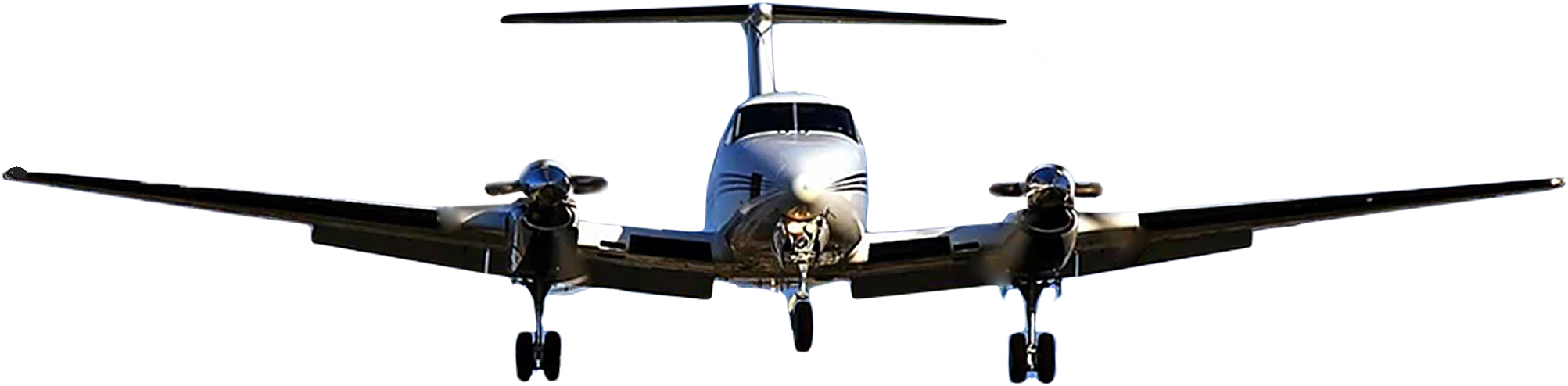

"There is no 'acceptable' amount of airframe icing at takeoff."
That line is from SAFO 06002, dated March 29, 2006. Its subject is ground deicing for turbine aircraft in nonscheduled Part 135 operations and in Part 91, which is where an owner-flown King Air, PC-12 or TBM lives. The same SAFO says recurrent training should, whenever possible, be scheduled to precede the winter season.
This article follows a winter flight in order: the ramp, the start, the climb through cloud, the approach and the runway. Your AFM or POH governs every procedure below.
Does 14 CFR 91.527 apply to your turboprop?
It depends on weight and engines. 14 CFR 91.527(a) bars takeoff with frost, ice or snow adhering to a propeller, windshield, wing, stabilizing or control surface, powerplant installation or flight instrument system. It allows one exception: frost under the wing in the fuel tank area, if authorized by the FAA.
That section sits in Subpart F. 14 CFR 91.501(a) limits Subpart F to large airplanes, turbojet-powered multiengine airplanes and fractional ownership program aircraft. Large means more than 12,500 lb maximum certificated takeoff weight under 14 CFR 1.1. A turboprop is not a turbojet. So as we read it, 91.527 reaches a King Air 360, which Textron lists at a 15,000 lb maximum takeoff weight, and not a King Air 260 at 12,500 lb, a PC-12 or a TBM, unless the airplane is in a fractional program. Other models are sorted by weight in does a King Air require a type rating.
The FAA says the same in AC 91-74B, paragraph 5-2: "For aircraft not covered by subpart F, there are no specific icing regulations." The next words point to 14 CFR 91.9, which bars operating without complying with the AFM limitations, markings and placards. And 14 CFR 91.7 makes the pilot in command responsible for deciding the airplane is in condition for safe flight.
No icing rule for your airplane does not mean frost is allowed on it.
Why does a little frost matter so much?
The FAA calls it the clean aircraft concept. AC 135-17, the small aircraft ground deicing guide, says test data show ice, snow or frost as rough as medium or coarse sandpaper on the leading edge and upper wing can cut lift by as much as 30 percent and raise drag by 40 percent. Stall speed goes up with it.
SAFO 06002 adds three points for turbine operators:
- Avoid smooth or polished frost on lift-generating surfaces as an acceptable preflight condition, even when otherwise permitted.
- Do a tactile, hands-on check of the critical surfaces when feasible.
- Do not refuse deicing because of cost.
Frost can also form when the air is above freezing. AC 91-74B, paragraph 5-4, describes clear ice forming on the upper wing when fuel cold-soaked at altitude stays in contact with the tank's upper surface after landing, and moist air meets it. It is easy to miss on a turnaround. A heated hangar works, and the same paragraph warns to make sure the airplane is dry before it leaves, or the water refreezes.
A turnaround after a long flight in the flight levels is a frost check, even on a mild, damp afternoon.
Published tuition. Travel expenses added if we come to you. Tuition shown takes effect January 1, 2027. Courses before then are at the current rate, so ask us.
Turboprop winter operations on the ramp: the cold start
The start is where cold does the most damage to the engine. The FAA's Airplane Flying Handbook, FAA-H-8083-3C, chapter 15, explains why. Low battery voltage diminishes the battery's ability to turn the compressor, and the possibility of a hot start increases, so "it is essential to check the battery's condition before every engine start" (p.15-10). Successful starting depends on the correct minimum battery voltage or a ground power unit of adequate output (p.15-12).
The handbook defines the two failures you are watching for (p.15-12):
| Term | What the handbook says | Usual cause it names |
|---|---|---|
| Hot start | A tendency to exceed maximum starting temperature limits, sometimes preceded by unusually high initial fuel flow | Not named; serious engine damage if allowed to continue |
| Hung or false start | The engine accelerates more slowly than normal and may stabilize below self-sustaining speed | Low battery power or a starter not turning the engine fast enough |
Light-off temperatures can approach the maximum in 2 or 3 seconds, so the handbook says to be prepared to cut off fuel. Covington Aircraft wrote in 2022 that the possibility of a hot start is much greater whenever a start begins at low cranking speeds, which it puts at 12 to 13 percent Ng.
A cold-soaked battery is the link. Twin Commander's TPE331 cold weather guide says preheating batteries under cold-soaked conditions improves their performance, and suggests turning the propeller by hand before flight to reduce drag from congealed oil. It also says to keep the engine at minimum idle until oil temperature approaches normal, and to hold off high power until it is in range.
In the cold, the battery and the GPU decide the start before any fuel goes in.
Two more cold weather notes from the engine side:
- Torque before temperature. The handbook says that in cold weather, torque limits can be exceeded while temperature is still within limits (p.15-2). Set takeoff power on the gauge your AFM names, not on lever position.
- Propeller lock-up. Pratt & Whitney's Airtime blog says PT6A propeller lock-up after shutdown is most likely when landing in a cold environment. It suggests idling slightly longer, 30 seconds to one minute, before shutdown.
A Pratt & Whitney Airtime post on flying a King Air in the Arctic says to keep snow and ice out of the engine and to protect the inlet and exhaust. AC 91-74B's checklist says to inspect turbine engine inlets and remove accumulated ice before flight.
When do the ice vanes or inertial separator go down?
When your AFM says so. AC 91-74B, paragraph 3-1, explains why turbine inlets ice in marginal conditions: air drawn into the engine creates reduced pressure at the inlet, which lowers its temperature below the surrounding air. Ice can also break off and be ingested.
For the King Air, Tom Clements quotes the POH in King Air magazine (March 2017): "Before visible moisture is encountered at +5°C and below." Note the word before. He also writes, as his own observation, that the speed loss with vanes deployed may range from five to 15 knots.
Other PT6A and TPE331 installations use different names, triggers and ground procedures. Find the temperature and the moisture trigger for your separator in your own AFM, and fly with that number in your head.
What does approval for flight in known icing allow?
Less than many owners assume. AC 91-74B draws two lines.
Airplanes not certificated for icing. They are not tested for inadvertent icing encounters, and pilots must avoid icing and exit at once if they meet it (paragraph 3-13). Some have wing and tail ice protection anyway, and the AC says those systems are for emergency use only. Boots on the wing do not make the airplane certificated.
Airplanes that are certificated. The AC's chapter 5 cautions that even airplanes approved for flight into known icing should not fly into severe icing, and that the certification does not include freezing drizzle or freezing rain. Some airplanes are prohibited from both regardless of intensity.
If your airplane is under Subpart F, 91.527(b) and (c) add rules on flight into known or forecast icing. For everyone else, the limitations section of the AFM is the rule, through 91.9. Read it for the icing equipment list, the minimum speeds in icing and any exit criteria before the season starts.
How should you use boots and propeller heat?
AC 91-74B, paragraph 3-4, is direct about pneumatic boots. The FAA recommends activating the deicing system at the first indication of icing. It says studies have found few, if any, documented cases of ice bridging on modern boot designs, so waiting for a set thickness is an old habit. Check your AFM, because it governs.
Residual and intercycle ice stays on even when boots work. The AC says that before beginning the approach, the pilot should cycle the boots, because they may increase stall speed and are best not used while landing. If ice remains, an adjusted approach speed may be appropriate per the AFM. On electrothermal propeller deice, it notes that ice shedding from the blades makes loud noise against the airframe that can distract the crew.
The approach is where ice bites. Paragraph 5-10 says to extend flaps in stages and note the airplane's behavior at each one. Paragraphs 5-6 and 5-7 warn that the autopilot can mask the handling changes ice brings, that in vertical speed mode it will hold the rate until the stall, and that unless the AFM authorizes it, vertical speed mode should not be used.
Before the first cold morning, inspect the boots. Dean Benedict advises in King Air magazine (December 2019) checking them for cracks and splits and using only the manufacturer's recommended product to dress them.
Contaminated runways: what TALPA means for a Part 91 pilot
TALPA, the FAA's Takeoff and Landing Performance Assessment initiative, changed how runway conditions are reported, and that part reaches every pilot. The FAA's TALPA page says airports use it to report conditions in Field Condition (FICON) NOTAMs. Per SAFO 16009, airport operators use the Runway Condition Assessment Matrix (RCAM) to produce a Runway Condition Code for each third of the runway, and pilot braking action reports now read good, good to medium, medium, medium to poor, poor or nil.
What is not a Part 91 rule is the landing distance math. AC 91-79B (2023) says the predeparture landing distance requirements apply to Part 91K, 121 and 135 operators of large transport category airplanes, and that those planning procedures are recommended, not required, for Part 91. Even for operators, FAA Order 8900.1, paragraph 4-503, says there is "no specific regulation requiring operators to assess landing distance requirements at time of arrival." What binds you is 14 CFR 91.103(b): know the runway lengths and the AFM takeoff and landing distance data before every flight.
The AC still gives you a tool. When your manufacturer provides no contaminated runway data, multiply the unfactored AFM dry landing distance by a factor from its Table 3-1. The factors include a 15 percent safety margin.
| Runway Condition Code | Braking action | Turboprop factor, with ground idle credit in the AFM | Factor without that credit (turbojet, no reverse) |
|---|---|---|---|
| 6 | Dry | 1.67 | 1.67 |
| 5, grooved | Good | 1.92 | 2.3 |
| 5, smooth | Good | 2.0 | 2.6 |
| 4 | Good to medium | 2.2 | 2.8 |
| 3 | Medium | 2.4 | 3.2 |
| 2 | Medium to poor | 2.7 | 4.0 |
| 1 | Poor | 2.9 | 5.1 |
Read the note under that table. The turboprop factors apply only when your AFM gives landing distance credit for the ground idle power lever position. Without it, the AC says to use the turbojet, no reverse column. On a code 1 runway, a turboprop without ground idle credit multiplies its dry distance by 5.1 instead of 2.9.
AC 91-79B also says to compare the time of the latest runway report with the weather since, because several overruns followed reports that were no longer reliable. On the runway, AC 91-74B warns that ice on the landing gear can cost directional control.
What should you rehearse with an instructor before winter?
SAFO 06002 asks turbine operators for a regular review of cold weather procedures and of the AFM icing limitations. A briefed session in your own airplane is a practical place to do it. You do not go looking for ice to practice in; you rehearse the decisions, numbers and callouts so they are ready when ice finds you.
- The cold start. Battery and GPU minimums from your AFM, the Ng at which fuel goes in, and the abort callout for a rising ITT or a hung start.
- Frost and deicing. Who checks the wing by hand, what the AFM allows under the wing, and when to pay for deicing.
- Ice vanes or separator. The trigger temperature, the selection before entering cloud, and the expected torque and speed change.
- Icing exit. For an uncertificated airplane, the exit plan before departure. For a certificated one, the exit criteria for severe icing and freezing drizzle in your AFM.
- The iced approach. Boot cycle before the approach, speed additive, flaps in stages, autopilot mode, hand flying.
- The landing number. A time of arrival landing distance worked with the AC 91-79B factors, against a real FICON NOTAM.
Access sends a CFII to train in your own aircraft at your airport, so recurrent training can be booked for the weeks before your first frost. The course covers systems, limitations and emergencies plus any area you ask for, so bring this list. What each course includes is on the aircraft pages, such as the King Air 100 and 200 and the PC-12.
Frequently asked questions
Does 14 CFR 91.527 apply to my King Air 200 or PC-12?
Not by its own terms, as we read it. 91.527 is in Subpart F of Part 91, which 14 CFR 91.501 limits to large airplanes over 12,500 lb, turbojet-powered multiengine airplanes and fractional program aircraft. AC 91-74B says airplanes outside Subpart F have no specific icing regulations, and that 14 CFR 91.9 still binds you to the AFM limitations. A King Air 360, listed by Textron at 15,000 lb, is covered.
Can I take off with a thin layer of polished frost on the wing?
The FAA advises against it. SAFO 06002 says turbine operators should avoid smooth or polished frost on lift-generating surfaces as an acceptable preflight condition, even when otherwise permitted, and that those surfaces should be completely free of contamination. AC 135-17 says frost as rough as medium sandpaper can cut wing lift by as much as 30 percent. Your AFM states any frost allowance.
Why is a PT6A more likely to have a hot start in the cold?
The FAA's Airplane Flying Handbook ties hot starts to low battery voltage, which diminishes the battery's ability to turn the compressor, and names low battery power as the usual cause of a hung start. A cold-soaked battery delivers less. Covington Aircraft, a PT6A shop, says starts begun at low cranking speeds of 12 to 13 percent Ng carry a much greater hot start risk. A GPU of adequate output helps.
Do I have to do a landing distance assessment on a contaminated runway under Part 91?
No regulation requires the time of arrival assessment, and FAA Order 8900.1 says that is true even for commercial operators. 14 CFR 91.103(b) does require you to know runway lengths and your AFM takeoff and landing distances before every flight. AC 91-79B recommends the assessment and gives landing distance factors by Runway Condition Code, including a turboprop line.
My airplane has boots but is not approved for known icing. Can I fly in light ice?
AC 91-74B says airplanes not certificated for icing are not tested for inadvertent encounters, and that pilots must avoid icing and exit immediately if they meet it. It describes wing and tail ice protection on such airplanes as being for emergency use only. Read the limitations section of your AFM, which binds you through 14 CFR 91.9.
Sources
- SAFO 06002, Ground deicing practices for turbine aircraft in nonscheduled 14 CFR part 135 operations and in part 91, FAA Flight Standards Service, March 29, 2006.
- 14 CFR 91.527, Operating in icing conditions, eCFR, text as of November 1, 2026.
- 14 CFR 91.501, Applicability (Subpart F), eCFR, text as of November 1, 2026.
- 14 CFR 1.1, General definitions, eCFR, text as of November 1, 2026.
- 14 CFR 91.103, Preflight action, eCFR, text as of November 1, 2026.
- 14 CFR 91.7, Civil aircraft airworthiness, and 14 CFR 91.9, Civil aircraft flight manual, marking, and placard requirements, eCFR, text as of November 1, 2026.
- AC 91-74B, Pilot Guide: Flight in Icing Conditions, FAA, October 8, 2015.
- AC 135-17, Pilot Guide: Small Aircraft Ground Deicing, FAA, December 14, 1994.
- Airplane Flying Handbook, FAA-H-8083-3C, Chapter 15: Transition to Turbopropeller-Powered Airplanes, FAA, 2021.
- AC 91-79B, Aircraft Landing Performance and Runway Excursion Mitigation, FAA, August 28, 2023.
- Order 8900.1, Volume 4, Chapter 3, Section 1, paragraph 4-503, FAA, November 13, 2017.
- SAFO 16009, Runway Assessment and Condition Reporting, Effective October 1, 2016, FAA, August 15, 2016.
- Takeoff and Landing Performance Assessment (TALPA), FAA, read November 18, 2026.
- What Is a PT6A "Hot Start"?, Fletcher Sharp, Covington Aircraft, March 30, 2022.
- Flying The Engine: TPE331 Cold Weather Operations, Helmuth Eggeling, Twin Commander Aircraft, December 22, 2013.
- How to Recognize, Resolve and Prevent Propeller Lock-up, Pratt & Whitney Airtime, May 21, 2020.
- Missbeechcraft Shares: How to Fly a Sports Car in The Arctic, Pratt & Whitney Airtime, December 20, 2017.
- King Air 360 and King Air 260 specifications, Textron Aviation, read November 18, 2026.
- Ask the Expert: Ice Vanes: How Important Are They?, Tom Clements, King Air magazine, March 1, 2017.
- Winter Readiness, Dean Benedict, King Air magazine, December 12, 2019.
Access Flight Training ServicesRevised 2026-11-18