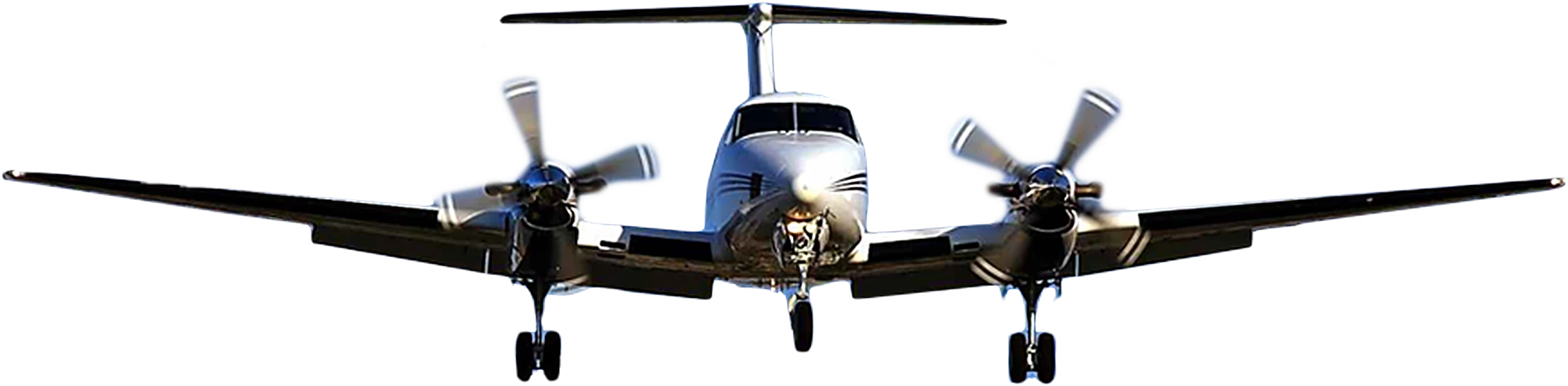


"Large aircraft means aircraft of more than 12,500 pounds, maximum certificated takeoff weight." That sentence from 14 CFR 1.1 decides whether a King Air will require a type rating. Its companion draws the other side of the line: "Small aircraft means aircraft of 12,500 pounds or less, maximum certificated takeoff weight." Two airplanes in one section of the same FAA data sheet land on opposite sides of it, the Model 300 and the Model 300LW.
Does a King Air require a type rating?
Only if it falls under 14 CFR 61.31(a). A pilot in command must hold a type rating for:
- large aircraft, except lighter-than-air
- turbojet-powered airplanes
- powered-lift
- "Other aircraft specified by the Administrator through aircraft type certificate procedures."
A King Air is a turboprop airplane, so (2) and (3) are out. That leaves weight under (1) and the catch-all under (4). Older sources number that catch-all (a)(3). The current paragraph is (a)(4).
For a King Air, the answer comes down to one number on the data sheet: maximum certificated takeoff weight.
Type rating by model: King Air and other turboprops
Weights below are maximum certificated takeoff weight from FAA type certificate data sheets, read on November 2, 2026. The data sheets use model numbers, so some names in the first column are common usage, such as Conquest II for Model 441.
| Aircraft | Data sheet | Max takeoff (lb) | Type rating? |
|---|---|---|---|
| King Air 65-90, A90, B90, C90, C90A, C90GT, C90GTi, E90 | 3A20 Rev 82 | 9,000 to 10,100 | No |
| King Air F90 | A31CE Rev 11, p.2 | 10,950 | No |
| King Air 100, A100, B100 | A14CE Rev 41, pp.5, 9, 12 | 10,600; 11,500; 11,800 | No |
| King Air 200, B200 | A24CE Rev 132, p.4 | 12,500 | No, unless modified above 12,500 lb |
| King Air 300 | A24CE Rev 132, p.31 | Over 12,500 | Yes |
| King Air 300LW | A24CE Rev 132, p.31 | 12,500 | No |
| King Air 350 (B300, B300C) | A24CE Rev 132, p.35 | 15,000 | Yes |
| Cheyenne III, IIIA | A23SO Rev 20, pp.2, 4 | 11,200 | No |
| Cheyenne 400LS (PA-42-1000) | A23SO Rev 20, p.6 | 12,050 | No |
| Conquest II (Model 441) | A28CE Rev 14, p.2 | 9,850 | No |
| Commander 1000 (695A; 695B) | 2A4 Rev 50, pp.27, 30 | 11,200; 11,750 | No |
| PC-12/47, /47E, /47G | A78EU Rev 39, pp.6, 9, 12 | 10,450 (earlier models 9,039; 9,921) | No |
| Meridian; M600, M700 | A25SO Rev 42, pp.5, 8, 9 | 4,850 or 5,092; 6,000 | No |
| TBM 700 type | A60EU Rev 40, p.3 | 7,615 with MOD 70-0680-10 (others 7,394; 6,579) | No |
| Caravan 208, 208B | A37CE Rev 25, pp.3, 6, 8 | 8,000; 8,750; 8,807 | No |
Two checks on that table. First, the catch-all: a word search of each data sheet above for "type rating" finds nothing, which is a text search and not an FAA ruling. Second, marketing names: "King Air 260" and "King Air 360" do not appear on A24CE, so find your model designation in the airplane's documents and read that line.
Published tuition. Travel expenses added if we come to you. Tuition shown takes effect January 1, 2027. Courses before then are at the current rate, so ask us.
Why the King Air 300LW does not need a type rating
A24CE Rev 132 lists the Model 300 and Model 300LW together (p.31). The 300 is over 12,500 lb. The 300LW is 12,500 lb.
Read the two definitions in 1.1 side by side: "more than 12,500 pounds" is large, and "12,500 pounds or less" is small. We take that to mean exactly 12,500 lb is small, so no type rating follows from weight. The same reasoning covers a King Air 200 at 12,500 lb.
The 300LW keeps the 300's 35,000-foot maximum operating altitude. Staying out of the type rating rule does not keep a King Air out of the high altitude rule. The high altitude endorsement test is separate.
Can a modified King Air 200 require a type rating?
Yes. The FAA's draft BE-200 Flight Standardization Board report assigns a BE-200 type rating to Model 200 airplanes certified above 12,500 lb: Restricted Category airplanes, and Commuter Category airplanes by STC. Treat it as a draft. The date on its cover reads "XX/XX/XXXX," so its wording may change.
The logic does not depend on the draft, as we read it: an airplane certificated above 12,500 lb is a large aircraft under 1.1, and 61.31(a)(1) applies. The draft itself notes that not every Restricted Category airplane is above that weight. A weight-increase STC can change the answer for one airframe without changing the name on the listing. Get the certificated weight from the AFM or its supplement.
Does your instructor need the type rating too?
Yes. 14 CFR 61.195(e): "A flight instructor may not give flight instruction, including instrument training, in an aircraft that requires the pilot in command to hold a type rating unless the flight instructor holds a type rating for that aircraft on his or her pilot certificate."
For a King Air 300, a 350 or a modified 200, ask to see that rating on the instructor's pilot certificate before you schedule. The other limits in 61.195, including time in make and model, are in our article on who can give an IPC.
What this means if you own the airplane
A student asks whether a rating is required. An owner has to act on the answer, and the answer changes with the airplane.
Under the line: a 90, a 100, or a 200 at 12,500 lb. No type rating. If you do not already hold them, 61.31(e) and (f) can still call for one-time complex and high-performance endorsements. The insurer is the larger variable. Broker BWI wrote on June 28, 2026 that most insurers require initial transition training and annual recurrent training for a King Air, with simulator training often preferred or required. Broker Ndemnifly says carriers want formal initial and recurrent training in type even where no type rating is required. No type rating does not mean no training requirement.
Over the line: a 300, a 350, or a modified 200. Whoever acts as pilot in command must hold the rating, and that includes a pilot you hire, so ask to see the certificate. Access's published King Air 300 and 350 courses do not include a type rating practical test; the other models are on the King Air training page.
A King Air 300 with an FF serial. A24CE lists two pilots as minimum crew for FF serials only (p.31, Note 10). That brings the second in command rules in 14 CFR 61.55 and the check in 61.58 into it, covered in how often recurrent training is required.
Buying one. Before you close, write down three items from the airplane's own documents: model designation, certificated maximum takeoff weight and serial number. Send them to your broker with your logbook totals, and ask what training they would require for that airplane.
Frequently asked questions
Do I need a type rating for my King Air C90?
No. FAA data sheet 3A20 shows 9,650 lb or 10,100 lb maximum takeoff weight across the C90, C90A, C90GT and C90GTi, under the 12,500 lb line in 14 CFR 1.1, and none is turbojet-powered. So 14 CFR 61.31(a) does not call for a type rating on weight. Your insurer may still set training conditions.
Do you need a type rating for a King Air 200?
Not at 12,500 lb, which is the maximum takeoff weight on FAA data sheet A24CE for the 200 and B200. An airplane modified above that weight can need one: the FAA's draft BE-200 board report, still undated, assigns a BE-200 rating to Model 200s certified above 12,500 lb. Check the AFM and supplements for your airplane.
Does a King Air 350 require a type rating?
Yes. FAA data sheet A24CE shows 15,000 lb for the B300 and B300C, over the 12,500 lb line, so the pilot in command must hold a type rating under 14 CFR 61.31(a). The King Air 300 is also over the line. The 300LW, at 12,500 lb, is not.
Do I need a type rating for my King Air, TBM or Meridian?
For a King Air it depends on the model: the 300 and 350 do, the others do not at standard weights. Not on weight for the TBM or Meridian: FAA data sheets show 7,615 lb or less for the TBM 700 type and 5,092 lb or less for the Meridian. A word search of those data sheets for "type rating" finds nothing, though that is a search and not an FAA ruling.
Can someone without the rating train me in my 350?
No. 14 CFR 61.195(e) says a flight instructor may not give flight instruction, including instrument training, in an aircraft that requires the pilot in command to hold a type rating unless the instructor holds that rating on his or her pilot certificate. Ask to see it before you schedule.
Sources
- 14 CFR 1.1, General definitions, eCFR, 2026.
- 14 CFR 61.31, Type rating requirements, additional training, and authorization requirements, eCFR, 2026.
- 14 CFR 61.195, Flight instructor limitations and qualifications, eCFR, 2026.
- 14 CFR 61.55, Second-in-command qualifications, eCFR, 2026.
- 14 CFR 61.58, Pilot-in-command proficiency check, eCFR, 2026.
- Flight Standardization Board Report, BE-200, Revision 2, draft dated XX/XX/XXXX, FAA, undated draft.
- Type Certificate Data Sheet A24CE, Rev 132, King Air 200, 300 and 350, FAA, 2026.
- Type Certificate Data Sheet 3A20, Rev 82, King Air 90 series, FAA, 2019.
- Type Certificate Data Sheet A31CE, Rev 11, King Air F90, FAA, 2017.
- Type Certificate Data Sheet A14CE, Rev 41, King Air 100 series, FAA, 2017.
- Type Certificate Data Sheet A23SO, Rev 20, Cheyenne III and 400LS, FAA, 2010.
- Type Certificate Data Sheet A28CE, Rev 14, Conquest II, FAA, 2024.
- Type Certificate Data Sheet 2A4, Rev 50, Commander, FAA, 2024.
- Commander 1000 models, Twin Commander, undated.
- Type Certificate Data Sheet A78EU, Rev 39, PC-12, FAA, 2025.
- Type Certificate Data Sheet A25SO, Rev 42, PA-46 family, FAA, 2026.
- Type Certificate Data Sheet A60EU, Rev 40, TBM, FAA, 2026.
- Type Certificate Data Sheet A37CE, Rev 25, Caravan, FAA, 2025.
- King Air Aircraft Insurance in 2026: Cost, Pilot Requirements, and How Coverage Is Actually Structured, BWI, 2026.
- Turbine & Jet Aircraft Insurance: Owner-Flown & Two-Crew, Ndemnifly, undated.
Access Flight Training ServicesRevised 2026-11-03