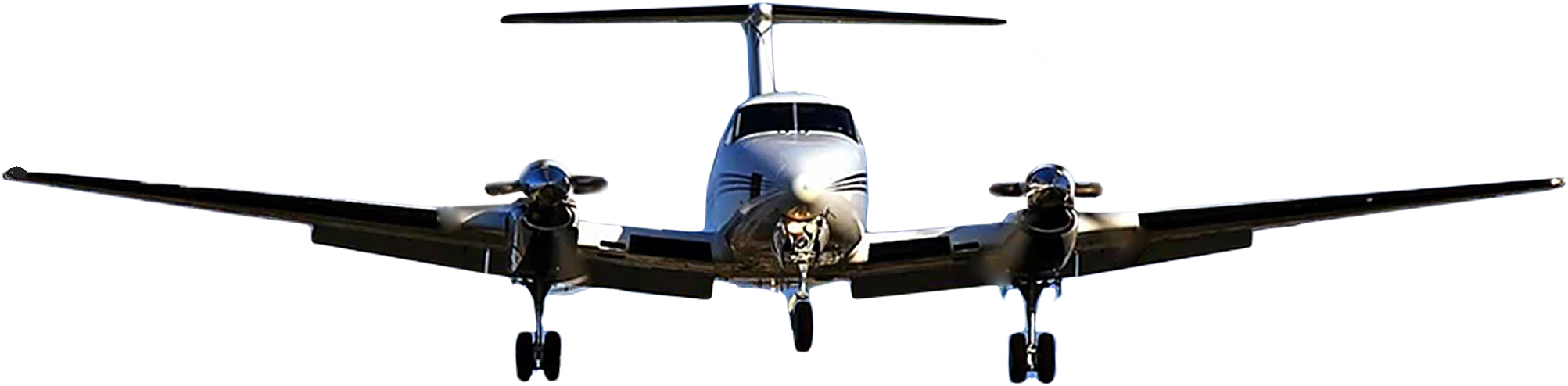

"Insurance doesn't transfer with ownership."
Angie Tovar of BWI, a broker, put it that way in an August 2025 post on buying and selling airplanes. The seller's policy ends when the airplane changes hands. From that moment, the only coverage is the one you bound, under the pilot conditions your underwriter wrote.
Those conditions are what turn a purchase into a training schedule. This article is for rated pilots stepping into a turboprop they are about to own. It covers what the insurer is likely to ask, what the FAA requires, who flies the airplane home, and the order of events between the quote and the first trip with passengers.
What training comes with buying a turboprop?
Two lists, from two places. The FAA's list is in 14 CFR 61.31 and is covered in the next section. The insurer's list is usually longer, and it is the one that decides whether you can fly the airplane on the day you own it.
Brokers describe the insurer's list this way:
| Source | Statement |
|---|---|
| BWI, buying and selling post, August 24, 2025 | If you are new to the type, underwriters may require transition training before the policy covers in-flight operation |
| BWI, King Air page, June 28, 2026 | Most insurers require initial transition training and annual recurrent. Simulator training is often preferred or required. Mentor pilot requirements possible |
| AssuredPartners Aerospace, sponsored content on AOPA's site, May 23, 2025 | An insurer-approved initial program for the specific make and model, and possibly a safety pilot for the first 25 hours or more |
None of those is an insurer's published rule. The training that comes with a turboprop purchase is set by your underwriter, for you, in that airplane, and you learn it only by asking.
Format is part of the answer. If the written conditions say simulator, that settles it. If they allow training in the airplane, Access delivers initial training in your own aircraft at your airport under 14 CFR Part 61, typically 3 to 5 days with about 10 flight hours if required, ending with an aircraft-specific test and a completion certificate. Tuition for a King Air 100 or 200 is $3,750; travel expenses are added when the instructor comes to you, and vary by location.
Which endorsements does 14 CFR 61.31 require?
14 CFR 61.31 has three one-time endorsements that a pilot coming from a fixed-gear piston single may not hold yet:
- Complex, 61.31(e). 14 CFR 61.1 defines a complex airplane as one with retractable landing gear, flaps and a controllable pitch propeller, or a FADEC in place of the propeller control. A fixed-gear turboprop does not meet that definition.
- High performance, 61.31(f). An airplane with an engine of more than 200 horsepower.
- Pressurized and high altitude, 61.31(g). A pressurized aircraft whose service ceiling or maximum operating altitude, whichever is lower, is above 25,000 feet MSL. It takes ground training and an endorsement, plus flight training in a pressurized aircraft that covers cruise above 25,000 feet, simulated rapid decompression without actually depressurizing, and emergency descent.
The complex and high-performance endorsements are not required if you logged pilot in command time in such an airplane before August 4, 1997. The (g)(3) exceptions for high altitude are narrower. Most turboprops in our high altitude endorsement table, which lists limits by data sheet, are above the 25,000-foot line. Check yours in the AFM.
An endorsement is a few lines in your logbook, and an underwriter can still want far more training than the endorsement takes.
Published tuition. Travel expenses added if we come to you. Tuition shown takes effect January 1, 2027. Courses before then are at the current rate, so ask us.
Does your turboprop need a type rating?
Usually not. Under 61.31(a), the pilot in command needs a type rating for a large aircraft, a turbojet-powered airplane, powered-lift, or an aircraft the FAA specifies through type certificate procedures. 14 CFR 1.1 defines a large aircraft as one of more than 12,500 pounds maximum certificated takeoff weight. A turboprop is not a turbojet, so weight decides it.
Textron lists the King Air 360 at 15,000 lb maximum takeoff weight and the King Air 260 at 12,500 lb. The 360 needs a type rating and the 260 does not, because 12,500 lb exactly is a small aircraft under 1.1. Older models, the 300LW and modified 200s are sorted in does a King Air require a type rating. That article reads the FAA data sheets for the PC-12, TBM and Meridian too, and finds all three under the line.
If the airplane you are buying needs a type rating, two more rules follow:
- Your instructor needs it too. 14 CFR 61.195(e) bars flight instruction in an aircraft that requires a type rating unless the instructor holds that rating.
- The rating takes a practical test. Access's published King Air 300 and 350 courses do not include a type rating practical test, so plan that step separately.
61.31(b) does allow the FAA to authorize a pilot to operate without the type rating for up to 60 days, for a ferry, training or test flight, or a practical test, within the United States. The FAA has to find that compliance with (a) is impracticable and that the authorization's limits give an equivalent level of safety. Treat it as an exception to apply for, not a plan.
Will the insurer ask for a mentor pilot?
It may. AssuredPartners wrote that a pilot moving from piston to turboprop may need a safety pilot, often a training school pilot, for the first 25 hours or more. BWI lists mentor pilot requirements among what a pilot transitioning into a King Air may face.
Mentor time comes from the policy, not from Part 61, and the hours and who may fly them vary by underwriter. Our article on mentor pilot turboprop insurance covers the ranges brokers report and how a mentor differs from dual instruction and a second in command.
If the conditions name a mentor, find that pilot before closing, because the first trip cannot leave without one.
Who flies the airplane home after closing?
Somebody covered by your policy. BWI writes that the buyer should bind a policy before taking possession, and describes a buyer who relied on the seller's policy for a ferry flight and had the claim denied after a gear-up landing. So the ferry pilot has to fit your policy, not the seller's.
You have three common options. Each needs your broker's written agreement.
- A hired ferry pilot. The pilot must be named on your policy or meet its open pilot warranty. In sponsored content on AOPA's site (October 2026), AssuredPartners Aerospace explains that a named pilots only policy covers only listed pilots, and that an open pilot warranty lets pilots who meet minimum qualifications fly occasionally. In an airplane that requires a type rating, the ferry pilot needs it too.
- You, after training. If your conditions require initial training before you fly as pilot in command, the airplane waits until it is done.
- You, with an instructor or mentor aboard. Possible only if the policy says so, and only within the conditions it sets for that flight.
If the pre-buy finds the airplane not airworthy, 14 CFR 21.197 lets the FAA issue a special flight permit for an aircraft capable of safe flight, to fly it to a base for repairs or maintenance, or to deliver it. That is a separate application, and your broker should know about it before the flight.
How do you time the quote, closing, training and first trip?
Work backward from the first trip you want to fly with passengers, and leave room at each step.
| Step | When | What to have |
|---|---|---|
| Quote | Before you sign, or as soon as you have a purchase contract | Tail number, model, your logbook totals |
| Pilot conditions in writing | Before closing | Training format, deadline, mentor hours, ferry plan |
| Training provider cleared | Before closing | Syllabus and instructor credentials sent to the broker |
| Policy bound | Effective at closing or possession | Proof of insurance for your lender, if you finance |
| Ferry flight | After binding | A pilot the policy covers |
| Initial training | As the conditions require | The airplane, at your airport if in-aircraft training qualifies |
| Mentor hours | After training, if required | The mentor the conditions name |
| First trip with passengers | After all of the above | Your logbook endorsements and certificate on file |
The sources behind the first rows: SkyWatch Insurance Services, a licensed agency, says in an undated guide that an N-number and basic specs are enough to start a quote before signing, that a broker can set a policy to take effect at closing, and that not meeting a checkout requirement can void coverage. BWI says a quote can take one to three days and that lenders typically want proof of insurance before releasing funds.
For the provider row, Access sends the aircraft-specific syllabus and the instructor's credentials to you or straight to your broker; the underwriter packet page lists each document. The quote, the conditions and the training dates should all exist on paper before the money moves.
What should you ask the broker in writing?
Ask before you sign the purchase agreement, and again before closing if anything changed.
- Is this airplane insurable with my logbook, at the hull value and liability limit I want?
- What initial training does the underwriter require, by when, and in what format? Is in-aircraft training with a CFII acceptable for this policy?
- Is a mentor or safety pilot required? For how many hours, and who qualifies?
- Is the policy named pilots only, or does it have an open pilot warranty? What does a ferry pilot need to be covered?
- Can the policy bind at closing, and does it cover the airplane on the ground until I complete training?
- Are the instructor and the training provider covered during the training days, and what must the certificate of insurance show?
- Which endorsements, ratings or medical class does the pilot clause require?
- What changes at the first renewal: recurrent interval, mentor hours, limits?
Keep the answers with the purchase documents. If your broker needs to see a syllabus to answer question 2, the aircraft pages list what each course includes, for example the King Air 100 and 200, the PC-12 and the TBM.
Frequently asked questions
Does the seller's insurance cover the flight home?
Do not count on it. BWI, a broker, writes that insurance does not transfer with ownership, that the seller's policy is invalid once the airplane changes hands, and that the buyer should bind a policy before taking possession. Whoever flies the airplane home needs to be covered by your policy, as a named pilot or under its open pilot warranty. Ask your broker in writing.
Do I need a type rating to fly a King Air I am buying?
Only if it is over 12,500 lb maximum certificated takeoff weight, the large aircraft line in 14 CFR 1.1, which brings in the type rating rule in 14 CFR 61.31(a). Textron lists the King Air 360 at 15,000 lb and the King Air 260 at 12,500 lb, so the 360 needs one and the 260 does not. Check the AFM for your airplane's certificated weight.
What endorsements will I need moving from a fixed-gear piston to a turboprop?
14 CFR 61.31 calls for one-time complex and high-performance endorsements if you do not already hold them, and the high altitude training and endorsement in 61.31(g) if the airplane is pressurized with a service ceiling or maximum operating altitude above 25,000 feet MSL. A fixed-gear turboprop is not complex under the definition in 14 CFR 61.1. Your underwriter may require far more.
Can I do initial training after closing, in the airplane I just bought?
That is up to your underwriter. BWI writes that underwriters may require transition training before the policy covers in-flight operation, and that simulator training is often preferred or required for a King Air. If in-aircraft training qualifies, get that in writing before closing, along with how the airplane is covered on the ground until the course is done.
How early should I call the broker?
Before you sign. SkyWatch Insurance Services says an N-number and basic specs are enough to start a quote on an airplane you are considering, and BWI says a quote can take one to three days. AssuredPartners Aerospace advises talking with your broker before your next aircraft purchase. Early answers on training and mentor hours give you time to schedule both.
Sources
- Buying or Selling? Here's What Happens to Your Aircraft Insurance Policy, Angie Tovar, BWI, broker, August 24, 2025.
- King Air Aircraft Insurance in 2026: Cost, Pilot Requirements, and How Coverage Is Actually Structured, Angie Tovar, BWI, broker, June 28, 2026.
- Transitioning to a higher performance aircraft, AssuredPartners Aerospace, broker, sponsored content on AOPA's site, May 23, 2025.
- Who can fly my airplane?, AssuredPartners Aerospace, broker, sponsored content on AOPA's site, October 23, 2026.
- How to Get Aircraft Insurance Before You Buy: What First-Time Owners Need to Know, SkyWatch Insurance Services, licensed agency, undated, read November 18, 2026.
- 14 CFR 61.31, Type rating requirements, additional training, and authorization requirements, eCFR, text as of November 1, 2026.
- 14 CFR 61.1, Applicability and definitions, eCFR, text as of November 1, 2026.
- 14 CFR 1.1, General definitions, eCFR, text as of November 1, 2026.
- 14 CFR 61.195, Flight instructor limitations and qualifications, eCFR, text as of November 1, 2026.
- 14 CFR 21.197, Special flight permits, eCFR, text as of November 1, 2026.
- King Air 360 and King Air 260 specifications, Textron Aviation, read November 18, 2026.
Access Flight Training ServicesRevised 2026-11-18