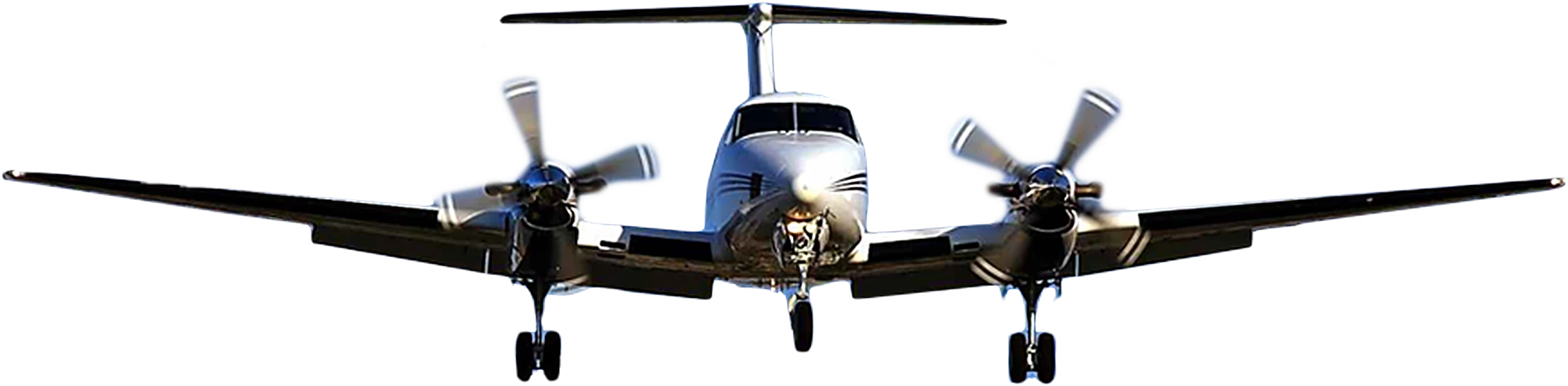

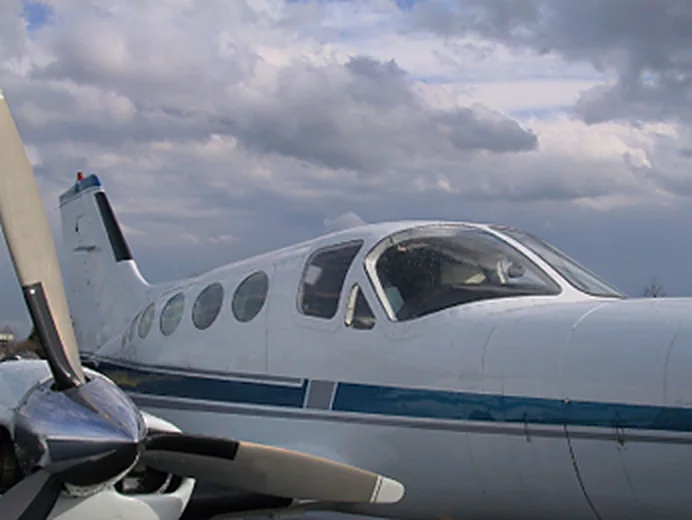
How much of your time is multi-engine, and how much of it is in this model? BWI Aviation Insurance, a broker, wants both for a Cessna 421 quote, along with your ratings, recent flying, training and loss history.
What BWI will not give you is a table of minimums. Its 421 page, reviewed October 28, 2026, says it no longer publishes pilot-hour criteria as current terms, and adds: "An old checklist is not a new underwriting approval." Cessna 421 insurance requirements are mostly whatever your own quote says, and only a short list of items comes from the FAA.
Cessna 421 insurance requirements: rule or policy?
| Item | Rule or policy | Where it comes from |
|---|---|---|
| Type rating | Rule, and not triggered at these weights | 14 CFR 61.31(a), 14 CFR 1.1 |
| Complex and high-performance endorsements | Rule, one time | 14 CFR 61.31(e) and (f) |
| High altitude endorsement | Rule, when 61.31(g) applies | 14 CFR 61.31(g) |
| Flight review within 24 calendar months | Rule | 14 CFR 61.56 |
| Instrument currency, and an IPC after a lapse of more than six calendar months | Rule | 14 CFR 61.57 |
| Instructor's time in make and model | Both | 14 CFR 61.195(f) for training required for a certificate or rating; a policy can set its own |
| Annual course or approved school | Policy | Broker statements below |
| Total, multi-engine and model time | Policy | Your quote |
| Hours of dual or a mentor before solo | Policy | Your quote |
| Simulator rather than the airplane | Policy | Your quote |
The word recurrent does not appear in Part 61 (edition revised as of January 1, 2026). If you owe a yearly course, look to your policy. Hours flown with a second pilot have their own vocabulary, covered in mentor pilot requirements in turboprop policies.
What FAA data sheets say about the 340, 414 and 421
| Model | FAA data sheet | Maximum takeoff weight | Rated power, each engine |
|---|---|---|---|
| 340 | 3A25, Rev. 28 | 5,975 lb | 285 hp |
| 340A | 3A25, Rev. 28 | 5,990 lb | 310 hp |
| 414 | A7CE, Rev. 51 | 6,350 lb | 310 hp |
| 414A | A7CE, Rev. 51 | 6,750 lb | 310 hp |
| 421, 421A | A7CE, Rev. 51 | 6,800 lb, 6,840 lb | 375 hp |
| 421B | A7CE, Rev. 51 | 7,250 or 7,450 lb, by serial | 375 hp |
| 421C | A7CE, Rev. 51 | 7,450 lb | 375 hp |
Every model sits well under the 12,500 lb line for a large aircraft in 14 CFR 1.1, and none is turbojet-powered, so neither of those tests in 61.31(a) calls for a type rating. Every engine is over the 200 horsepower in 61.31(f). With retractable gear, flaps and controllable-pitch propellers, these airplanes also meet the complex definition in 14 CFR 61.1.
Tuition and course notes are on the pages for Cessna 421 training, Cessna 340 training and Cessna 414 training.
Published tuition. Travel expenses added if we come to you. Tuition shown takes effect January 1, 2027. Courses before then are at the current rate, so ask us.
Does a 340, 414 or 421 need a high altitude endorsement?
The test in 61.31(g)(1) is "a pressurized aircraft (an aircraft that has a service ceiling or maximum operating altitude, whichever is lower, above 25,000 feet MSL)."
The data sheets give part of the answer. For the 340 and 340A, 3A25 requires a marking, placard or manual statement of maximum altitude: 23,500 feet without oxygen, 30,000 feet with it. For the 414, 414A, 421B and 421C, A7CE has no maximum operating altitude line, but its manifold pressure tables run to 30,000 feet.
Our reading: those numbers point above 25,000 feet, so plan on the endorsement unless you already hold it or an exception in 61.31(g)(3) applies. The rule turns on the lower of two figures, and the service ceiling is not on the data sheet, so confirm both in your POH. How the high altitude endorsement works covers the training itself.
What do brokers say about pressurized Cessna twins?
These are broker statements, not insurer rules. They are dated, they differ in detail, and we found no insurer's published minimums for these airplanes.
| Broker | Broker statement, paraphrased | Date |
|---|---|---|
| BWI Aviation Insurance | On the 340: the records it reviewed establish no universal hour threshold, and a course completion does not automatically establish approval under a policy | October 2026 |
| BWI Aviation Insurance | On the 414: discuss transition and recurrent training requirements and named-pilot approval | October 2026 |
| AssuredPartners Aerospace, sponsored article on AOPA's site | If the airplane is pressurized, expect insurer-approved training; single to multi-engine typically means 25 to 50 hours of dual | May 2025 |
| Scott Smith, Sky Smith Insurance Agency | Cabin-class or pressurized airplanes carry annual factory approved training; underwriters don't usually say who is approved, so have your broker submit the syllabus | July 2024 |
| Scott Smith, Sky Smith Insurance Agency | One 421 example: an 800-hour instrument pilot with 10 hours of multi-engine time; the lowest terms were an approved school and 30 hours of dual before solo, and other companies wanted 50 to 100 | December 2020 |
| Sunset Aviation Insurance | The hardest 421s and 414s to insure have pilots over 75, or pilots moving up with very little multi-engine time; sample 421 premiums run from $16,000 to $22,000 | Page modified January 2023 |
Broker statements tell you what you will be asked, and your underwriter's answer is the one that counts. The 421 example above is one pilot, one market and nearly six years old, so read it as a question to raise and leave the numbers out of your budget.
Owners also trade their own quotes on pilot forums. Those are anecdotes, so we left them out.
Does a 340, 414 or 421 have to go to a simulator?
Not under the regulations we read. Part 61 allows this training in the airplane, and 14 CFR 61.57(d) allows an IPC in an aircraft appropriate to the category. Your policy can still require one, and Smith wrote in 2024 that underwriters often prefer you train in someone else's airplane before they insure yours, so raise that as well.
A simulator has things to offer here that the airplane cannot. The FAA's pamphlet Flying Light Twins Safely, since pulled from its FAASTeam website, says: "Low-altitude engine failure is never worth the risks involved." On Access courses no engine is shut down during training, and no engine failure is simulated between rotation speed and 500 feet AGL. A simulator can run the failure that SOP leaves out, while your own airplane gives you your own panel, your engines and your airport. Choose by what your underwriter requires and what you most need to practice, and read what can be trained in the airplane with an engine out before you decide.
In a twin, FAA-S-ACS-8C includes one-engine-inoperative tasks in the IPC, and those have to be done in an aircraft or a Level B, C or D full flight simulator. AC 61-98E also calls for multiengine and instrument ratings on the instructor's flight instructor certificate.
What should 340, 414 and 421 owners ask an underwriter?
- What total time, multi-engine time, time in this model and recent flying do you require of me? BWI suggests separating time in the airplane from total, multi-engine and retractable-gear time.
- Is training required before I fly solo? How many hours of dual or mentor time, and who may give it?
- Is there an annual training condition? Does it apply to named pilots, to open pilot warranty pilots, or both, and how is the 12 months measured?
- Which formats and providers satisfy it? If a simulator is required, say so. If in-aircraft training can qualify, here is the syllabus.
- What must the instructor have: hours in this make and model, a name on the policy, or both?
- Is the airplane covered in flight during training, before the requirement is met?
- Does my age change any of this? Smith wrote in 2025 that one company's open pilot warranty sets an age range of 25 to 65.
- Will you confirm all of that in writing, naming the pilot, the registration and the exact model?
Asking is easier if you know what a written answer should say: how to get an underwriter's answer before you pay. Ask before you close on the airplane, because the terms can change whether the airplane still makes sense.
Send these through your broker with the exact model and serial number, since the data sheet treats a 421B and a 421C differently.
Frequently asked questions
What are the Cessna 421 insurance requirements for a pilot with little multi-engine time?
Cessna 421 insurance requirements come from your quote, and we found no published list. As one broker's example, Scott Smith of Sky Smith Insurance Agency described in 2020 an 800-hour instrument pilot with 10 hours of multi-engine time buying a 421. The lowest terms he saw were an approved school and 30 hours of dual before solo, and other companies wanted 50 to 100. Ask your broker for your own numbers before you buy.
Does a 340 or a 421 have to go to a simulator center, or can someone come to my airplane?
Part 61 does not send you to a simulator for this training. Your policy might. Ask your broker whether in-aircraft training qualifies for you and this airplane, have the syllabus submitted, and get the answer in writing. If the underwriter requires a simulator, that settles it.
Do I need a type rating for a Cessna 340, 414 or 421?
Not on weight or engine type. FAA data sheets list maximum takeoff weights from 5,975 lb for the 340 to 7,450 lb for the 421C, well under the 12,500 lb line in 14 CFR 1.1, and these are piston airplanes. You do need the complex and high-performance endorsements in 14 CFR 61.31, and check your POH for the high altitude endorsement.
How often do I need recurrent: what the FAA says versus what my policy says?
The FAA requires a flight review within 24 calendar months under 14 CFR 61.56 and recent experience under 14 CFR 61.57. Part 61 does not use the word recurrent. A yearly course comes from your policy: Scott Smith, who owns Sky Smith Insurance Agency, wrote in 2024 that pressurized airplanes carry annual training, so read how your policy measures the 12 months.
Does my instructor need hours in a 421?
There are two answers. 14 CFR 61.195(f) requires 5 flight hours of pilot-in-command time in the specific make and model for training required for a certificate or rating in a multiengine airplane. A policy can set its own minimum: Scott Smith, who owns Sky Smith Insurance Agency, quotes wording that requires a CFI with 5 hours in the make and model. Ask your broker what yours says.
Sources
- Cessna 421 Insurance Cost, BWI Aviation Insurance, reviewed 2026.
- Cessna 340 Insurance Cost and Quote Review, BWI Aviation Insurance, reviewed 2026.
- Cessna 414 Chancellor Insurance Cost, BWI Aviation Insurance, reviewed 2026.
- Transitioning to a higher performance aircraft, AssuredPartners Aerospace, sponsored content on AOPA, 2025.
- Training is Required, Scott "Sky" Smith, Cessna Owner Organization, 2024.
- Moving Up the Ladder, Scott "Sky" Smith, Cessna Owner Organization, 2020.
- Open Pilot Warranty, Scott "Sky" Smith, Cessna Owner Organization, 2025.
- Cessna 421 Golden Eagle Airplane Insurance, Sunset Aviation Insurance, 2023.
- Cessna 414 Chancellor Airplane Insurance, Sunset Aviation Insurance, 2023.
- Type Certificate Data Sheet A7CE, Revision 51, FAA, 2024.
- Type Certificate Data Sheet 3A25, Revision 28, FAA, 2024.
- 14 CFR Part 61, edition revised as of January 1, 2026, US Government Publishing Office, 2026.
- 14 CFR 1.1, general definitions, eCFR, 2026.
- 14 CFR 61.1, applicability and definitions, eCFR, 2026.
- 14 CFR 61.31, type ratings and additional training, eCFR, 2026.
- 14 CFR 61.56, flight review, eCFR, 2026.
- 14 CFR 61.57, recent flight experience, eCFR, 2026.
- 14 CFR 61.195, flight instructor limitations, eCFR, 2026.
- Instrument Rating Airplane ACS, FAA-S-ACS-8C, FAA, 2023.
- AC 61-98E, currency requirements and guidance for the flight review and IPC, FAA, 2024.
- Flying Light Twins Safely, P-8740-66, FAA, posted 2015.
Access Flight Training ServicesRevised 2026-11-03