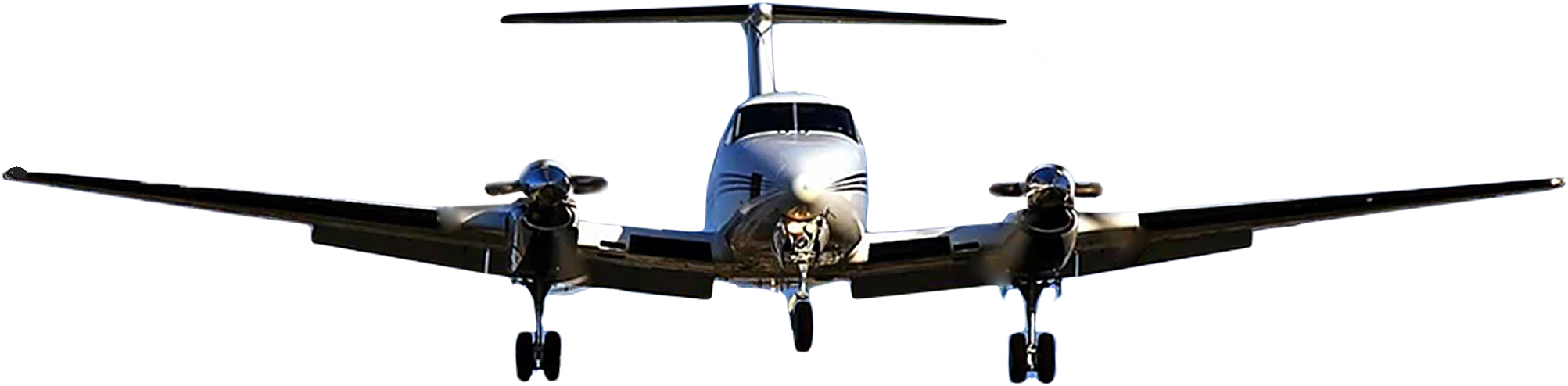


"The required takeoffs and landings were performed in an aircraft of the same category, class, and type (if a class or type rating is required)". Apart from a tailwheel clause, that is all 14 CFR 61.57(a) says about the airplane in which your three takeoffs and landings have to be made. Make and model are not in the sentence. For the pilot of a King Air, a PC-12, a TBM or a Cessna 421, currency vs proficiency starts there: the rule that makes you legal to carry another person does not ask whether you have flown this one.
The clocks themselves are in how often recurrent training is required. What follows is what they leave out.
Currency vs proficiency: what does each word measure?
Currency is recent experience counted in a logbook. Proficiency is skill, and neither word is defined in 14 CFR 1.1 or 61.1. Section 61.57 is titled "Recent flight experience" and uses the word currency only for instrument flying.
The FAA sets the two side by side in AC 61-98E. Para 1.9.1 says pilots should design a currency program "tailored to their individual operating environments and needs," with the emphasis on proficiency above the minimum currency requirements. Para 2.1.2 gives a reason: studies show loss of control usually occurs when pilots lack proficiency. The AC is guidance and says of itself that it does not bind the public.
Legal currency is the floor written into the rule, and the FAA's own guidance tells pilots to train above it.
What does 14 CFR 61.57(a) ask of a King Air pilot?
Three takeoffs and three landings within the preceding 90 days, as sole manipulator, in the same category and class. Type enters only if a type rating is required, and a King Air 200 at 12,500 lb needs none (King Air type ratings by model). As we read those words, three landings in a Baron satisfy the paragraph for that King Air: both are multiengine land airplanes. A PC-12 and a TBM share the single-engine land class with every piston single.
AC 61-98E para 3.1.3 says that for non-high-performance small aircraft the requirements "apply only to category and class," so a pilot who meets them in a Cessna 152 also meets them in a 172. It then recommends more than the rule: currency "in each separate M/M," meaning make and model, before carrying passengers.
Where no type rating is required, three landings in the right class make a pilot legal to carry another person, whichever model they were flown in.
Transition Training, a General Aviation Joint Steering Committee sheet produced by FAA Safety Briefing, says that even among pilots legally certificated within a category and class, "significant differences can exist among different types of aircraft within that category and class."
Published tuition. Travel expenses added if we come to you. Tuition shown takes effect January 1, 2027. Courses before then are at the current rate, so ask us.
IFR currency vs proficiency: what six approaches leave out
61.57(c)(1) lists three things, logged within the preceding 6 calendar months: six instrument approaches, holding procedures and tasks, and intercepting and tracking courses with navigational electronic systems. It does not name the kind of approach, the make and model, or the autopilot.
Paragraph (c)(2) allows all of it in a full flight simulator, flight training device or aviation training device, "provided the device represents the category of aircraft," here airplane. AC 61-98E para 3.2 adds that the device must be FAA-qualified or approved. So, as we read it, instrument currency for a pressurized twin can be kept in an approved device that represents an airplane, whether or not it represents yours. A device earns its place: it can put the weather at minimums, and a simulator can run failures that are not flown in an airplane.
Para 2.1.5 separates the two words: "Pilots who are instrument rated, but not instrument proficient, are also susceptible" to spatial disorientation and loss of control in IMC. The Airplane Flying Handbook says of instrument flying tasks (p. 18-17) that without continuing and regular practice, "skill erosion begins almost immediately."
Six logged approaches do not show whether you can hand fly one to minimums in your own airplane.
An IPC under 61.57(d) carries a longer task list, but it is required only after a lapse of more than six calendar months: see who can give an IPC and what it covers.
Does a flight review have to be in your own airplane?
No. 14 CFR 61.56(c)(1) asks for a review "in an aircraft for which that pilot is rated," and AC 61-98E para 4.2.1.1 says a review in any one of them meets the requirement for all. The content is as open: 61.56(a) sets a minimum of 1 hour of flight training and 1 hour of ground training, covering the Part 91 operating rules and the maneuvers and procedures the reviewer judges necessary.
The guidance is tighter than the rule. The AC calls the review "a proficiency-based exercise" (para 4.1.1), says the instructor may wish to recommend the aircraft most commonly flown (para 4.2.1.2) and says the instructor "should always include abnormal and emergency procedures applicable to the aircraft flown" (para 4.3.5.1). A flight review in any airplane you are rated for satisfies 14 CFR 61.56, and the emergency procedures reviewed are that airplane's.
What legal currency never names
| Item | 61.56 and 61.57(a) to (c) | Where the FAA does put it |
|---|---|---|
| Make and model | Category, class, and type if a type rating is required | AC 61-98E para 3.1.3, as a recommendation |
| Engine failure | Not named | Para 2.1.3.4, for light piston twins; para 4.3.5.1: abnormal and emergency procedures, in every flight review |
| Pressurization problem, emergency descent | Not named | 14 CFR 61.31(g), for the high altitude endorsement; no repeat interval |
| Autopilot failure | Not named | Para 2.2.3, in a review flown with automation |
| Aircraft systems | Not named | Para 4.3.5.3, in the oral part of a review |
The words emergency, failure, malfunction, pressurization, autopilot and trim appear nowhere in 61.56 or 61.57 (eCFR text of November 23, 2026).
What can you rehearse between annual courses?
Para 1.9.1 says currency practice can usually ride on flights you already make. FAA guidance supplies the list:
- Hand flying. Para 2.2.2 strongly recommends manual control at times in airplanes with automated flight systems.
- IFR procedures on VFR days. AIM 5-1-2 urges it, to maintain IFR proficiency.
- Your AFM or POH emergency section. The handbook (p. 18-1) calls thorough familiarity with the manufacturer's procedures the key to managing an emergency.
- The oxygen system. The handbook's turboprop outline (p. 15-15) lists a preflight functional test, down to mask fit and the mask microphone.
Other items want an instructor or a simulator. Para 2.2.3 has the instructor simulate automation failures by safe means, for example by disengaging the autopilot on an approach, never by turning off switches or pulling breakers. Engine failures have altitude floors in the airplane, and some belong only in a simulator: see engine out training in the airplane.
For the plan, Appendix B of AC 61-98E is a sample proficiency flight repeated every 4 to 6 weeks, ending with "Review your performance" and "Schedule next proficiency flight." Its maneuvers suit a light airplane, so we would keep the frame and take the content from your AFM with your instructor. A personal currency program works as a written list with dates on it, and the FAA publishes a sample to start from.
WINGS adds a record. AC 61-91K, the current revision, says a phase takes a demonstration of proficiency in specified knowledge and skill tasks (para 5) and is valid for 12 months (para 7.3.1).
Access recurrent flight training reviews systems, limitations and emergencies in your own aircraft, under an SOP that shuts down no engine and simulates no engine failure between rotation speed and 500 feet AGL.
What should an owner ask besides "are you current"?
"Current" answers a question about the logbook. These ask about the airplane:
- In which airplane were your last three takeoffs and landings, by day and at night?
- Were your last six approaches in this airplane, another one or a device, and how many did you hand fly?
- In what aircraft was your last flight review, and did it cover this airplane's abnormal and emergency procedures?
- When did you last practice an autopilot failure in this airplane with an instructor?
- How many hours in this make and model, in total and in the last 6 months?
- Do you keep a written currency program, and may I see your WINGS record? AC 61-91K para 8.3 says a pilot may let others, such as an insurance company, view it.
A pilot can run the same list alone. Training for professional pilots in the owner's aircraft lists what the owner and the broker receive, and the renewal planner turns a renewal month into training dates.
Put the answers and their dates on the same sheet as the policy's training clause.
Frequently asked questions
Pilot currency vs proficiency: what is the difference?
Currency is the recent experience 14 CFR 61.57 counts: three takeoffs and landings in 90 days to carry another person, and six approaches, holding, and intercepting and tracking in 6 calendar months for IFR. Proficiency is skill in the airplane you fly, and the regulations do not define it. FAA AC 61-98E para 1.9.1 tells pilots to design a personal currency program that emphasizes proficiency above the minimum currency requirements.
I am IFR current. Does instrument currency mean I am proficient in my King Air?
No. 14 CFR 61.57(c) asks for six approaches, holding, and intercepting and tracking in 6 calendar months, and lets you log them in an approved device that represents the category of aircraft. It names no make or model and no failure. AC 61-98E para 2.1.5 says pilots who are instrument rated but not instrument proficient are also susceptible to spatial disorientation and loss of control in IMC.
Does night currency make me proficient at night?
It makes you legal to carry another person at night. 14 CFR 61.57(b) asks for three takeoffs and landings to a full stop within 90 days, between 1 hour after sunset and 1 hour before sunrise, in the same category and class, and type if a type rating is required. AC 61-98E para 3.1.2 asks pilots to evaluate their own need for more proficiency and planning before a night flight in marginal conditions.
Where does the FAR/AIM define currency vs proficiency?
Neither book defines the pair. 14 CFR 1.1 and 61.1 define neither word; 61.57 is titled "Recent flight experience" and speaks of instrument currency. We found no definition in the AIM with Change 3, effective July 9, 2026, which uses proficiency as advice: paragraph 5-1-2 urges pilots to practice IFR procedures even when operating VFR. The FAA's side-by-side treatment is AC 61-98E.
Can I do my flight review in a different airplane from the one I fly?
Yes. 14 CFR 61.56(c)(1) asks for a review in an aircraft for which you are rated, and AC 61-98E para 4.2.1.1 says a review in any one of them meets the requirement for all. The same AC says the instructor may wish to recommend the aircraft most commonly flown (para 4.2.1.2) and says the instructor should always include abnormal and emergency procedures applicable to the aircraft flown (para 4.3.5.1).
Sources
- 14 CFR 61.57, Recent flight experience: Pilot in command, eCFR, text as of November 23, 2026.
- 14 CFR 61.56, Flight review, eCFR, text as of November 23, 2026.
- 14 CFR 61.31, Type rating requirements, additional training, and authorization requirements, eCFR, text as of November 23, 2026.
- 14 CFR 61.1, Applicability and definitions, and 14 CFR 1.1, General definitions, eCFR, text as of November 23, 2026.
- AC 61-98E, Currency Requirements and Guidance for the Flight Review and Instrument Proficiency Check, FAA, October 30, 2024.
- AC 61-91K, WINGS: Pilot Proficiency Program, FAA, October 30, 2024.
- Airplane Flying Handbook, FAA-H-8083-3C, Chapter 15: Transition to Turbopropeller-Powered Airplanes, FAA, 2021.
- Airplane Flying Handbook, FAA-H-8083-3C, Chapter 18: Emergency Procedures, FAA, 2021.
- Aeronautical Information Manual, paragraph 5-1-2, Follow IFR Procedures Even When Operating VFR, FAA, effective July 9, 2026.
- GAJSC Safety Enhancement Topic: Transition Training, General Aviation Joint Steering Committee, produced by FAA Safety Briefing, undated (marked AFS-920 18-06).
- Type Certificate Data Sheet A24CE, Rev 132, King Air 200, 300 and 350, FAA, 2026.
Access Flight Training ServicesRevised 2026-11-27